

By Bruce, Senior Technical Director & Master Artisan at Art Inlay
In luxury architecture, the gap between a stunning digital rendering and the physical installation is where projects either succeed or fail. As the Technical Director at Art Inlay, my primary responsibility is bridging that gap. Transforming a complex bespoke marble inlay concept into a flawless physical floor requires a meticulous transition from architectural CAD files to 5-axis CNC waterjet paths.
For architects and developers designing five-star hotel lobbies or luxury villas, understanding this CAD-to-stone integration ensures a seamless workflow, exact budget forecasting, and a breathtaking final result.
1. The Translation: DWG to CNC Vectors
When an architect sends us a floor plan (typically in DWG or DXF format), our engineering team cannot simply feed it into a machine. Architectural drawings often contain overlapping lines, unclosed polygons, or thicknesses that do not translate to physical stone. We painstakingly redraw and optimize every single vector to account for the exact kerf (the width of the waterjet stream), ensuring that when the pietre dure elements are cut, they interlock with zero-grout precision.
2. Cost Factors: Why Vector Complexity Matters
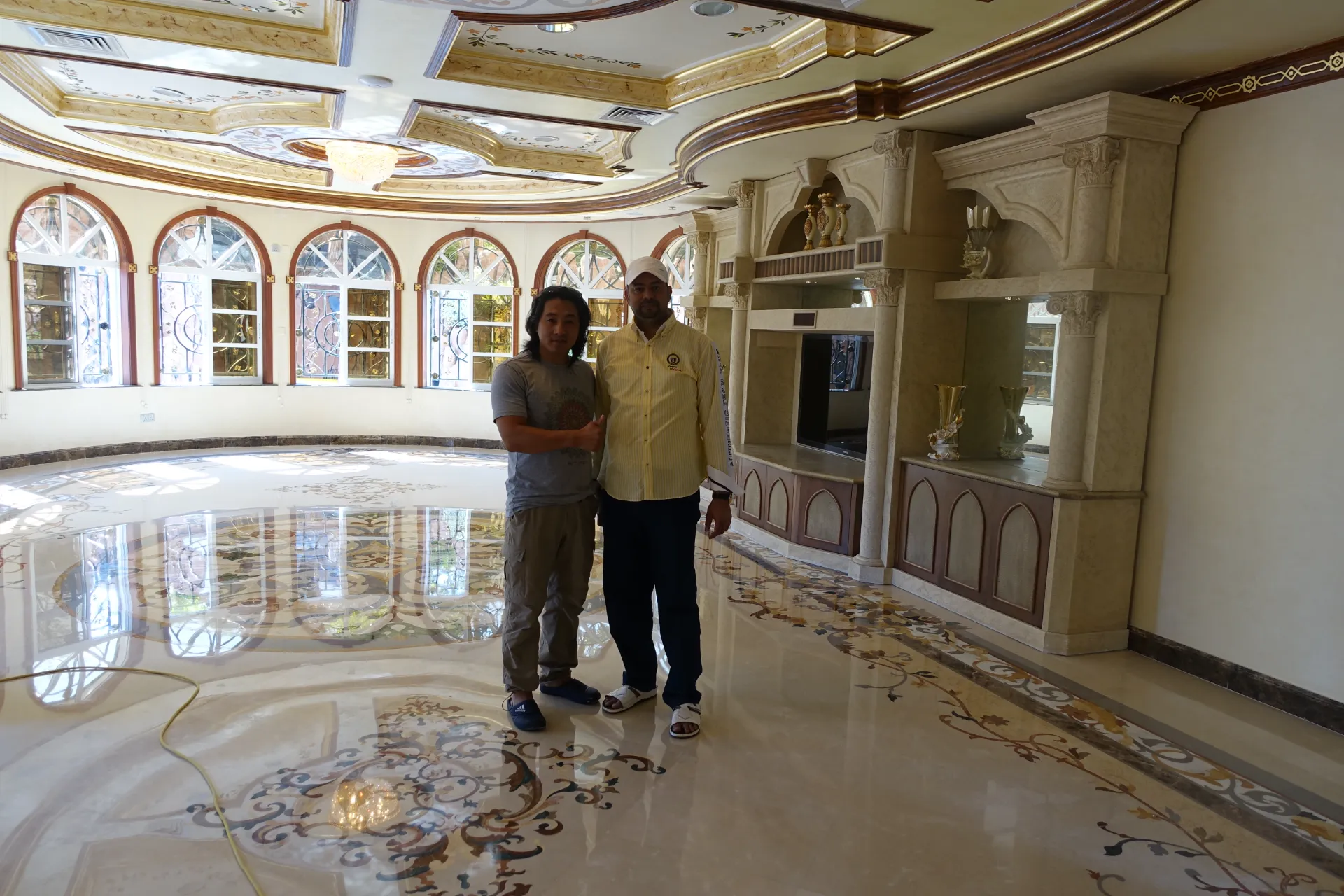
When budgeting for marble floor medallions, developers often assume the cost is purely based on the square meterage of the stone. In reality, the complexity of the CAD vectors is a massive cost driver:
- Cut Time: A geometric border with straight lines takes significantly less machine time than a highly intricate, organic floral pattern with hundreds of tight radius curves.
- Material Yield: Complex CAD designs often result in higher material waste during the cutting process, especially when matching the natural veining of luxury marbles like Calacatta Gold or Emperador.
3. Bespoke Waterjet vs. Traditional Tile Layouts
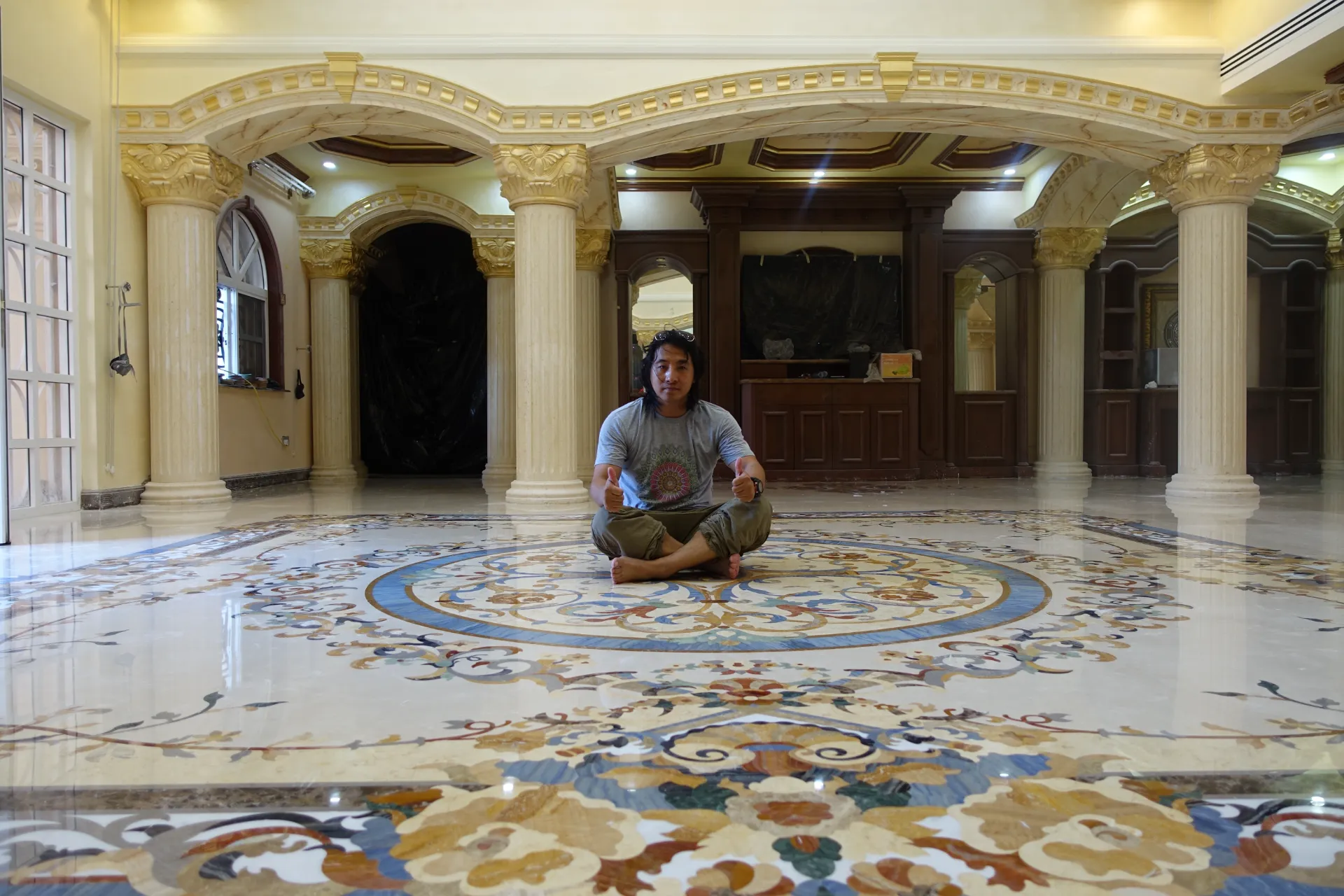
The precision of our CAD integration is what separates bespoke marble inlay from high-end standard tiling. Standard tiles force the architect to design within a rigid grid. With advanced CAD-to-waterjet engineering, the stone bends to the architect’s will. We can create sweeping curves that trace the exact radius of a grand staircase, or embed a seamless corporate logo into a lobby floor without a single disruptive grout line.
4. The Final Step: The Numbered Dry-Lay Map
Once the stone is cut and polished, we do not simply ship a crate of loose pieces. We conduct a full-scale dry-lay assembly on our factory floor. We verify the physical inlay against the master CAD file, number every single piece, and generate a corresponding installation map. This guarantees that your local stone masons can install the complex medallion as easily as a puzzle.
Conclusion
Flawless custom marble flooring begins long before the stone is cut; it begins with elite technical engineering. By partnering with a manufacturer that truly understands CAD integration, architects can push the boundaries of luxury design without fear of execution failure.
To submit your DWG files for a technical review, or to discuss your next luxury project, contact our engineering team today.
Frequently Asked Questions
What file formats do you accept for custom inlay designs?
We prefer standard architectural vector formats, primarily AutoCAD DWG or DXF files. We can also work with high-resolution vector PDFs or Adobe Illustrator (AI) files to begin the engineering process.
How accurate is the waterjet cutting process?
Our 5-axis CNC waterjet machines cut with a tolerance of less than 0.1 millimeters. This extreme precision is what allows us to create zero-grout joints in our pietre dure and custom marble medallions.