
Related on Art Inlay: architectural specification guide · inlaid marble flooring · what drives cost · installation manual
Why Specification Decisions Happen Early
Most project delays in custom marble inlay work trace back to a single problem: specification decisions made too late. Stone selection, pattern complexity, finish, and installation substrate all affect manufacturing lead time, logistics, and final appearance. Getting these details defined at schematic design, not during construction documents, is the difference between a smooth supply process and costly revisions.
This guide covers what designers and architects need to specify, and why each decision matters.
1. Stone Selection: Base and Inlay Materials
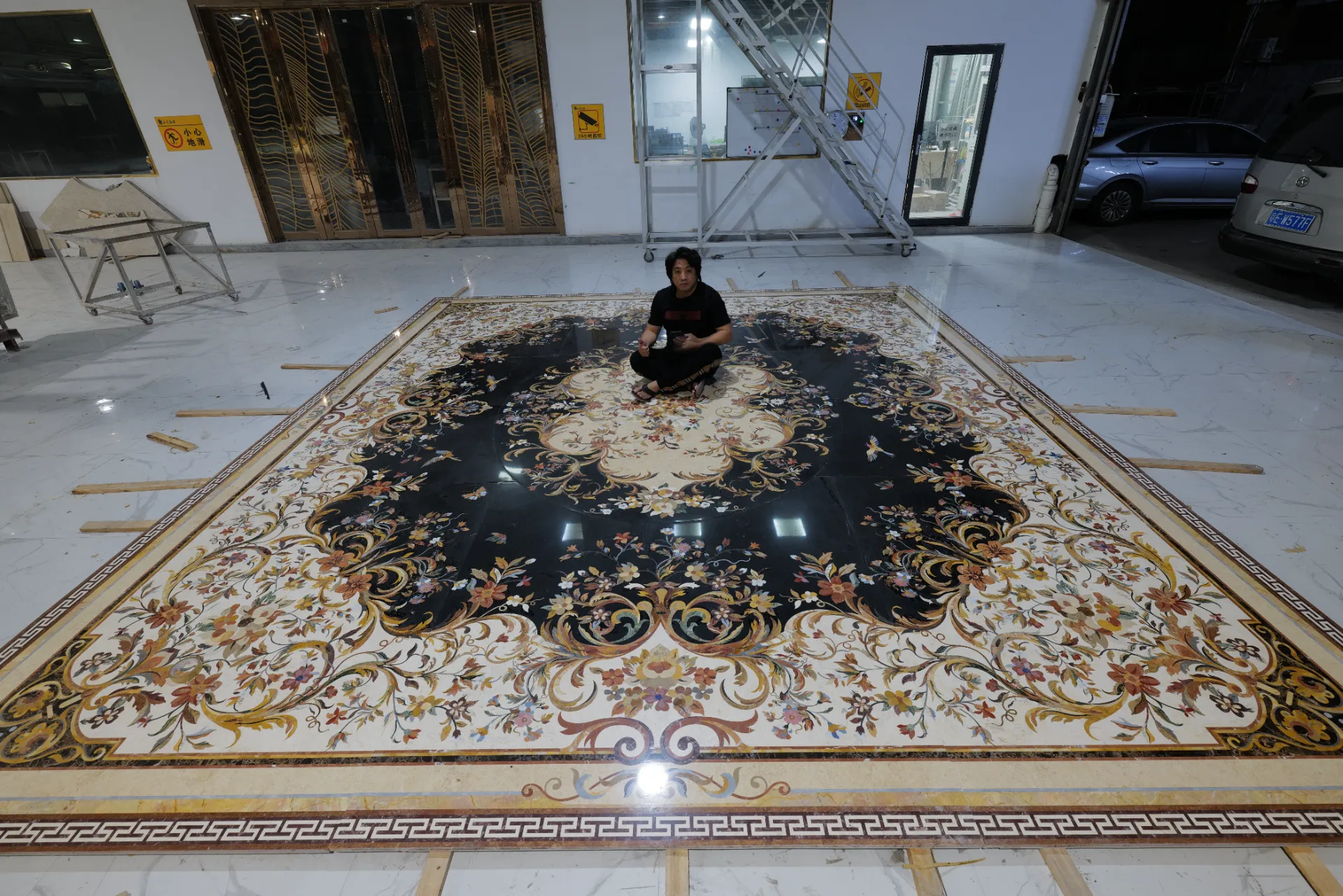
The base stone is the canvas. For large floor fields, Lasa bianco, Carrara C, and Calacatta are the most commonly specified whites. Darker bases, Nero Marquina, Emperador Dark, absolute black granite, provide the contrast needed for lighter inlay motifs.
Inlay stones are cut to fit cavities routed or waterjet-cut into the base. Common inlay species include Verde Alpi, Rosso Verona, Giallo Siena, Blue Bahia, and onyx varieties. Each stone has its own hardness, grain direction, and edge-holding characteristics. When in doubt, request a test cut sample before full production approval.
One practical rule: the wider the hardness differential between base and inlay stone, the more critical the adhesive and grouting specification becomes.
2. Pattern Complexity and Its Cost Implications
Pattern complexity directly drives production cost and lead time. There are three general tiers:
Geometric inlay, repeated linear or radial patterns. Fastest to produce. Suitable for large floor fields, corridors, and retail environments. Lower cut count per square metre.
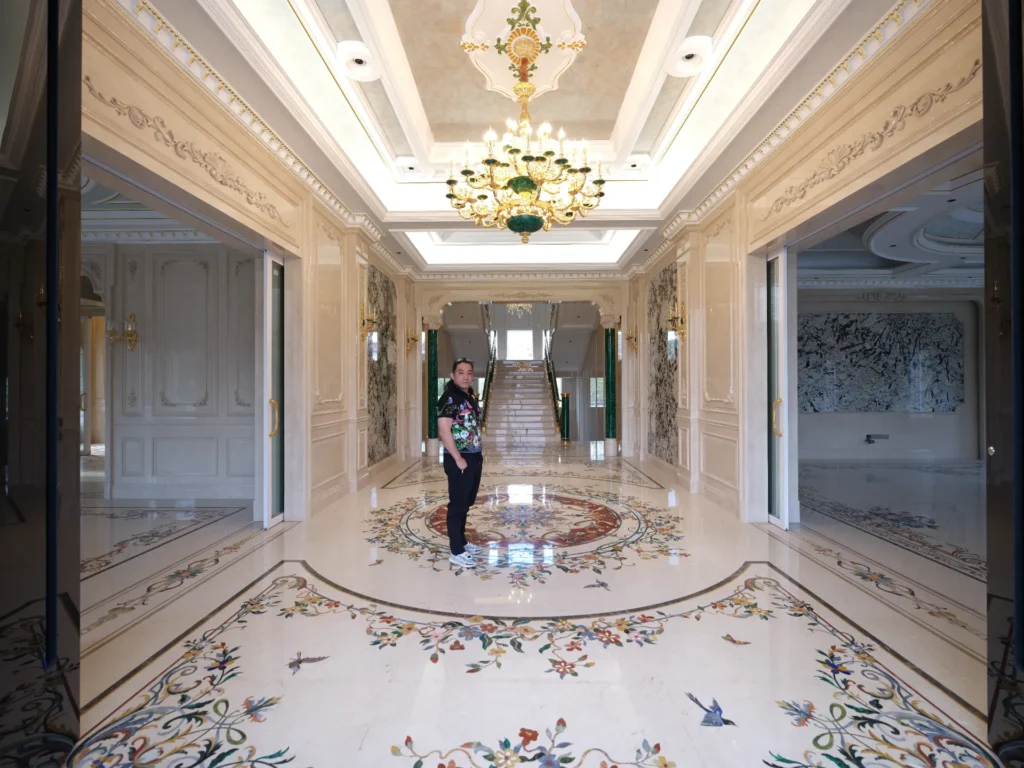
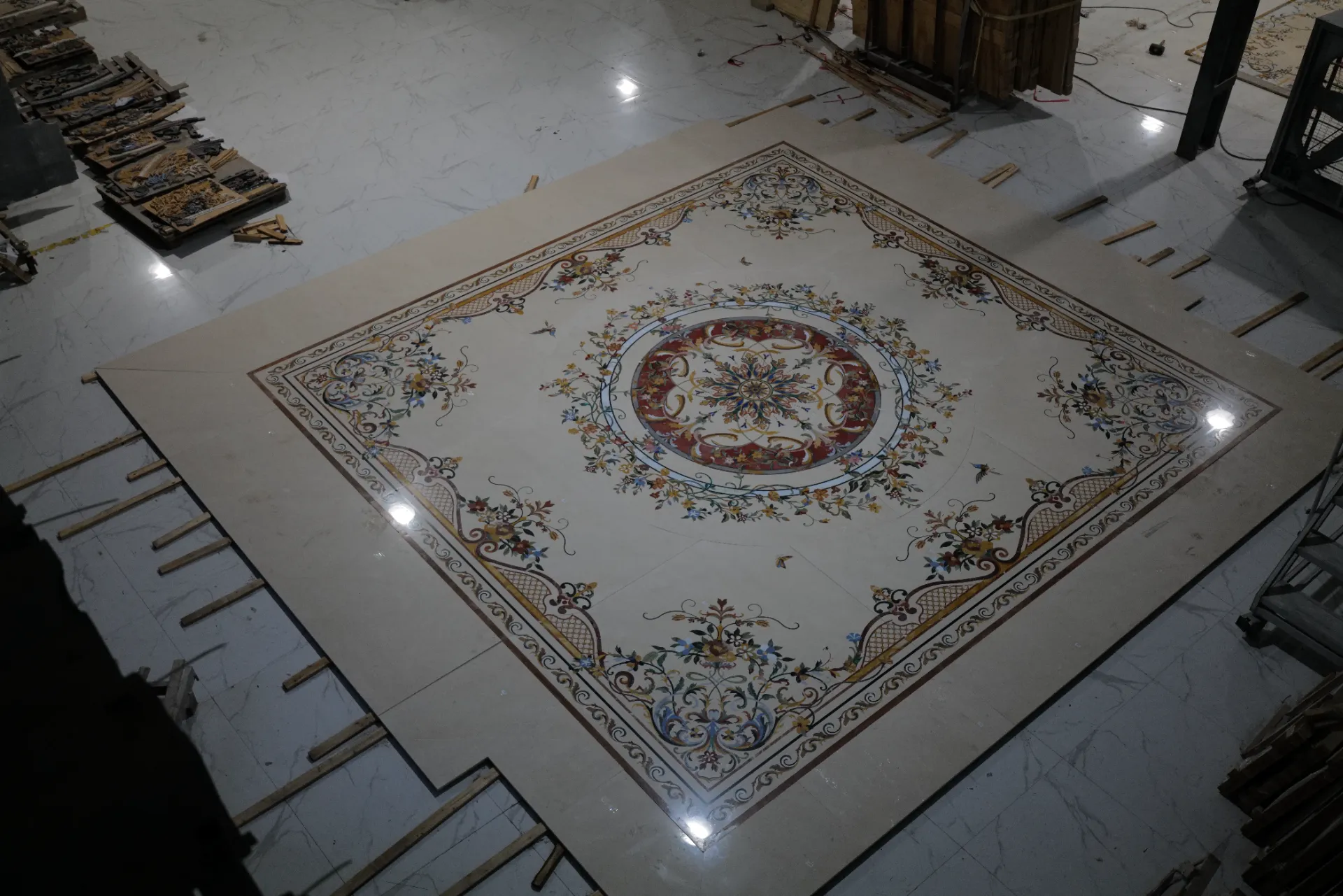
Medallion-centred compositions, a central custom marble floor medallion with a geometric or banded surround field. Mid-range complexity. Most common specification for entry halls, hotel lobbies, and villa reception rooms.
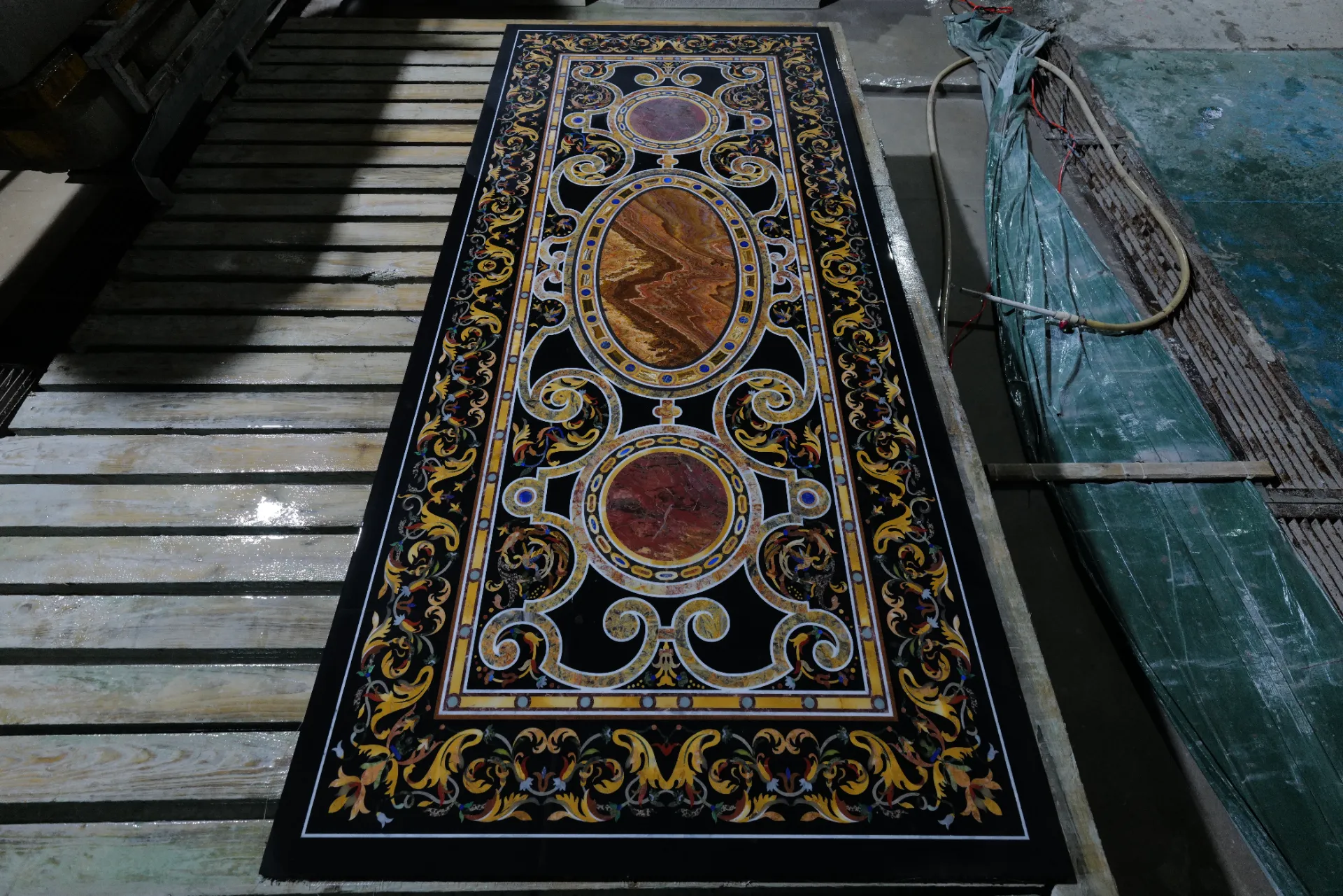
Figurative pietre dure, pictorial compositions using stone as pigment. Each element is individually shaped and fitted. The highest cut count, the most skilled fitting work, and the longest production time. These are commissions, not catalogue items.
For budget control, clearly define which areas receive which tier. Over-specifying complexity in secondary corridors is a common source of budget overrun.
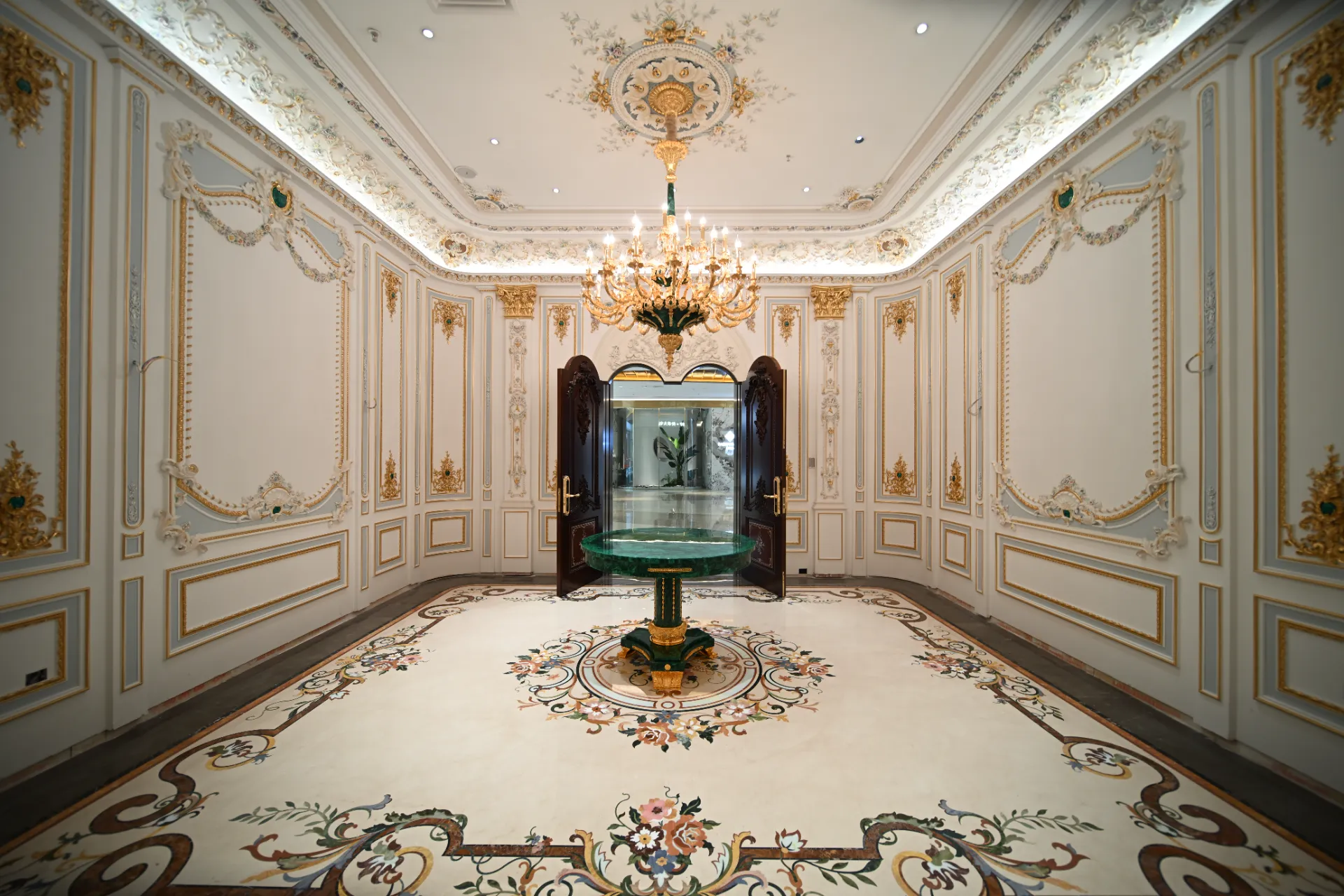
3. Waterjet Tolerance and Joint Width
The quality of a marble inlay installation is defined by joint width. At Art Inlay, our standard waterjet tolerance is ±0.2mm on pattern elements above 30mm. This produces hairline joints that, once filled and honed, are nearly invisible to the eye.
Joint width should be specified at the design stage, not left to the installer. Typical specifications:
- Luxury residential: 0.5–1mm filled joint
- Hotel public areas: 1–1.5mm filled joint (accounts for foot traffic movement)
- Exterior applications: 2mm+ with flexible filler (thermal movement allowance)
Specifying too tight a joint for an exterior installation, or a climate with significant temperature variance, risks cracking. Always confirm the installation environment before sign-off on joint specification.
4. Finish
Honed is the standard for interior marble inlay flooring. It eliminates surface reflection that would compete visually with the inlay pattern itself, and it is more practical underfoot in high-traffic areas.
Polished finishes are appropriate for wall panels, borders, and decorative inserts where the reflective quality enhances the design intent. In floor applications, polished finish increases maintenance requirements and reduces slip resistance, specify with care in hospitality environments.
Brushed and antique finishes are occasionally specified for aged or rustic design programmes. These require a different production sequence and should be noted at the initial enquiry stage, as they affect stone species selection.
5. Panel Size, Substrate, and Logistics
Large-format marble inlay panels (above 1200mm × 1200mm) require structural backing, typically 10–12mm aluminium honeycomb or fibre-reinforced backing board. This reduces weight for wall applications and provides dimensional stability for large floor fields.
For floor medallion installations, the surrounding field tiles should be produced from the same stone batch as the medallion surround to ensure colour consistency. Batch matching is easy to accommodate when ordered together; it becomes difficult, sometimes impossible, when the surrounding field is sourced separately later.
For international shipping, all panels are packed in wooden crates with foam and corner protection. Fragile inlay elements receive additional internal bracing. Lead time from factory to site varies by destination: 18–25 days sea freight to most US and EU ports from Jiangmen. Air freight available on request for urgent programmes.
6. What to Include in a Specification Request
A complete specification enquiry should include:
- Floor plan with dimensions and inlay zone marked
- Pattern concept or reference (sketch, precedent image, or CAD)
- Stone preferences for base and inlay (or ask for material recommendations)
- Required finish
- Delivery location and target on-site date
- Installation environment (interior/exterior, climate, underfloor heating if any)
- Budget range if available
With this information, we can provide a fixed-price quotation, material samples, and a production timeline within five business days.
Contact Bruce directly at contact@artinlay.com or via WhatsApp +86 139 2919 9999 to open a project file. For complex commissions, we recommend scheduling a 30-minute technical consultation before the formal RFQ.
Frequently Asked Questions
What is the minimum order for custom marble inlay flooring?
There is no fixed minimum. Small commissions, single medallions, decorative borders, accent panels, are accepted. Pricing reflects the fixed setup cost of cutting and fitting complex patterns, which makes small areas proportionally more expensive per square metre than large fields.
How long does production take?
Standard geometric inlay: 4–6 weeks from approved design and stone selection. Complex medallion compositions: 8–10 weeks. Figurative pietre dure commissions: 12–20 weeks depending on scope. Lead times quoted on enquiry once we have the full specification.
Can you match an existing floor pattern?
Yes. Provide a dimensioned drawing, CAD file, or detailed photographs. We will replicate the pattern and, where possible, source matching stone species. Colour-matching is subject to natural stone variation, we recommend requesting samples before production approval.
Do you supply installation instructions?
Yes. Each shipment includes a technical installation guide covering substrate requirements, adhesive specification, grouting, and final honing. For complex projects, we can arrange a video consultation with the installation team prior to delivery.
— Bruce, lead stone engineer, Art Inlay
Related reading
- Bespoke Marble Mosaics: Hand-Finished Architectural Stone Collections
- Lightweight Marble Inlay for Elevators & Aircraft: The Honeycomb Advantage
- Large-Scale Marble Inlay for Hospitality & Grand Hall Architecture
Explore the work: bespoke marble inlay flooring, custom marble medallions, or begin a commission.
Commissions
Start your marble inlay commission
Send a drawing or a photograph, we return a technical material study, a cut plan and an itemised quote within three working days.