
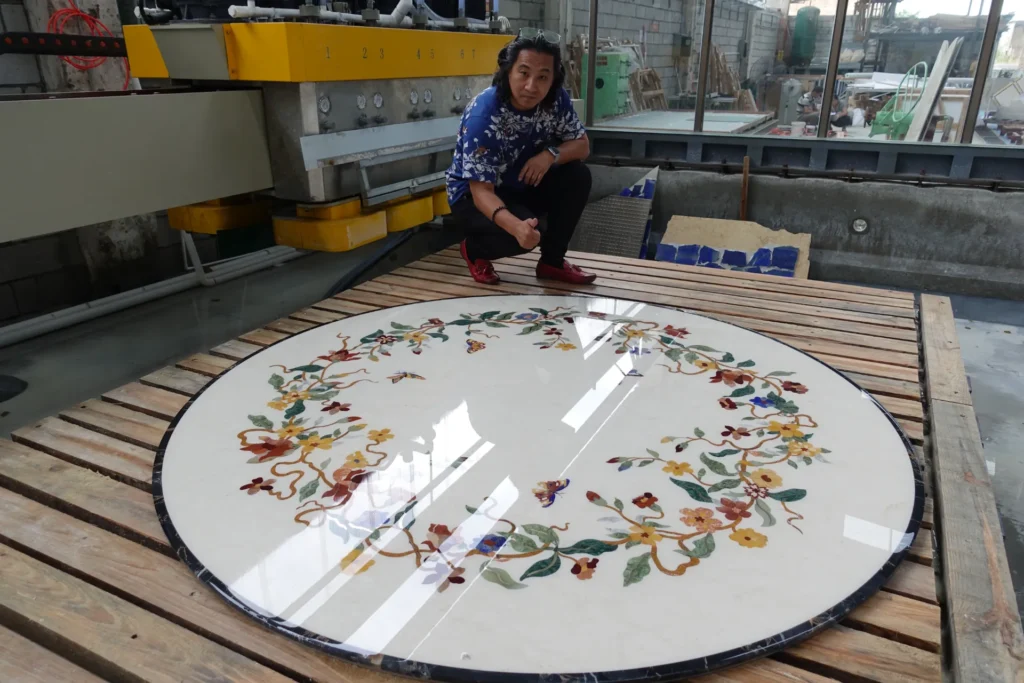
Luxury Marble Inlay Maintenance is a specialized technical requirement that ensures the decadal longevity of bespoke stone art. At Art Inlay, we engineer our panels with a monolithic, zero-grout finish, which significantly simplifies the cleaning process compared to traditional tile installations. However, maintaining the mineralogical clarity of high-end stones like Statuario or Lapis Lazuli requires adherence to specific preservation protocols.
1. The Importance of PH-Neutral Cleaning
Natural stone is chemically sensitive. The most common cause of surface “clouding” is the use of acidic or abrasive cleaners. We specify the use of pH-neutral, stone-specific detergents for all daily maintenance. These agents effectively lift surface debris without reacting with the calcium carbonate structure of the marble or the high-performance epoxy resins used in our waterjet assembly. For luxury hotel lobbies and high-traffic grand halls, we recommend a strictly controlled cleaning schedule to prevent the build-up of microscopic abrasives.
2. Factory Pre-Sealing and Re-Sealing Intervals
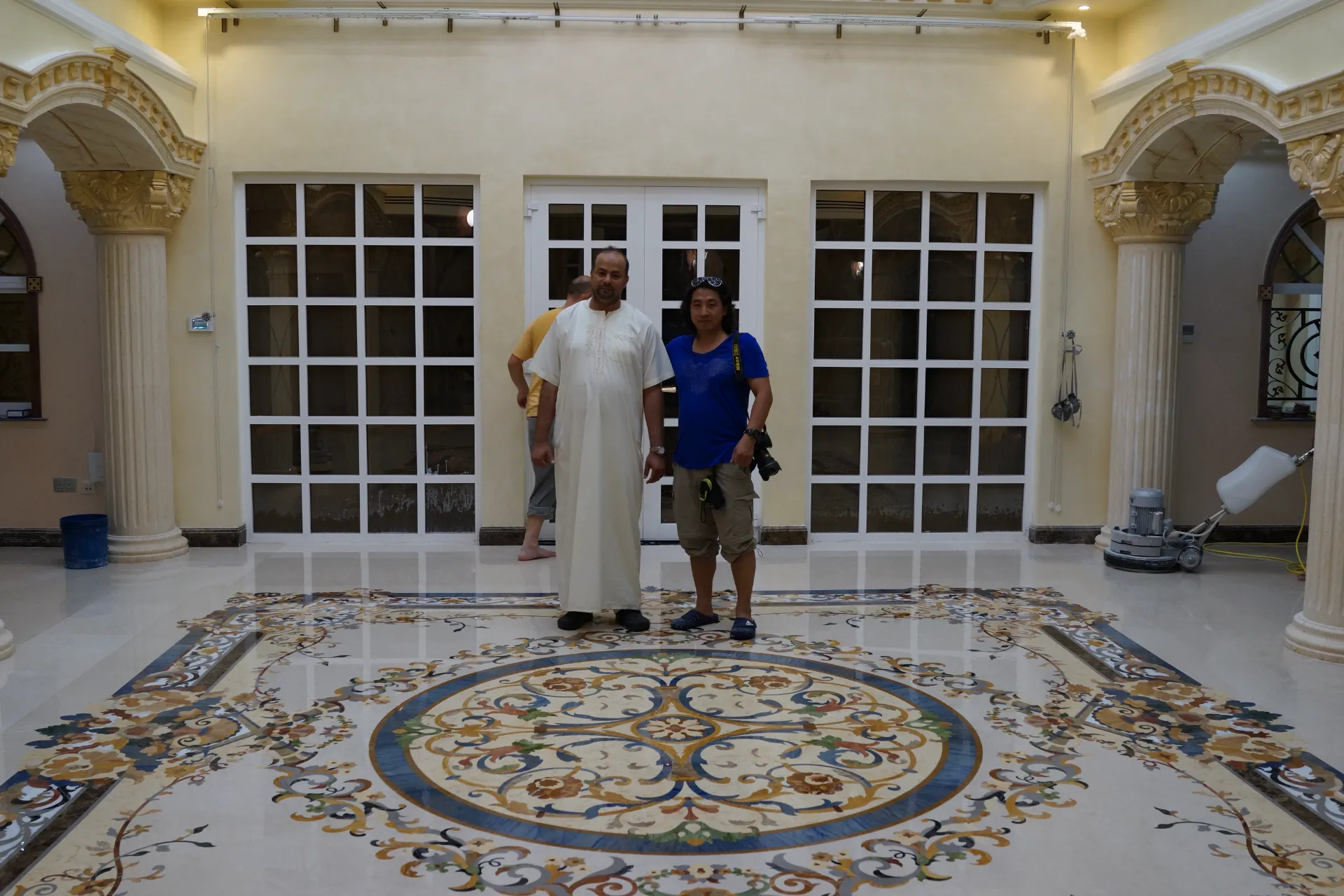
Every project delivered from our Jiangmen factory is pre-sealed with industrial-grade penetrative sealants. These sealants reside below the stone’s surface, creating a hydrophobic barrier that prevents deep staining from organic spills. For high-traffic architectural environments, we recommend a professional re-sealing interval of 12–24 months. This maintenance cycle preserves the stone’s color saturation and ensures that the intricate waterjet patterns remain as vibrant as the day of installation.
3. Professional Restoration & Re-Polishing
Over decades, even the highest-grade marble inlay may develop surface micro-scratches. Because our inlay is fabricated as a monolithic slab (ground flat after assembly), it can be professionally re-polished in situ. This process involves a sequential diamond-abrasive honing that removes the damaged surface layer and restores the original factory-level high-gloss or honed finish. Unlike thin-veneer alternatives, our deep-set inlay allows for multiple restoration cycles over the building’s lifespan.
4. Avoiding “Ghosting” in Multi-Stone Compositions
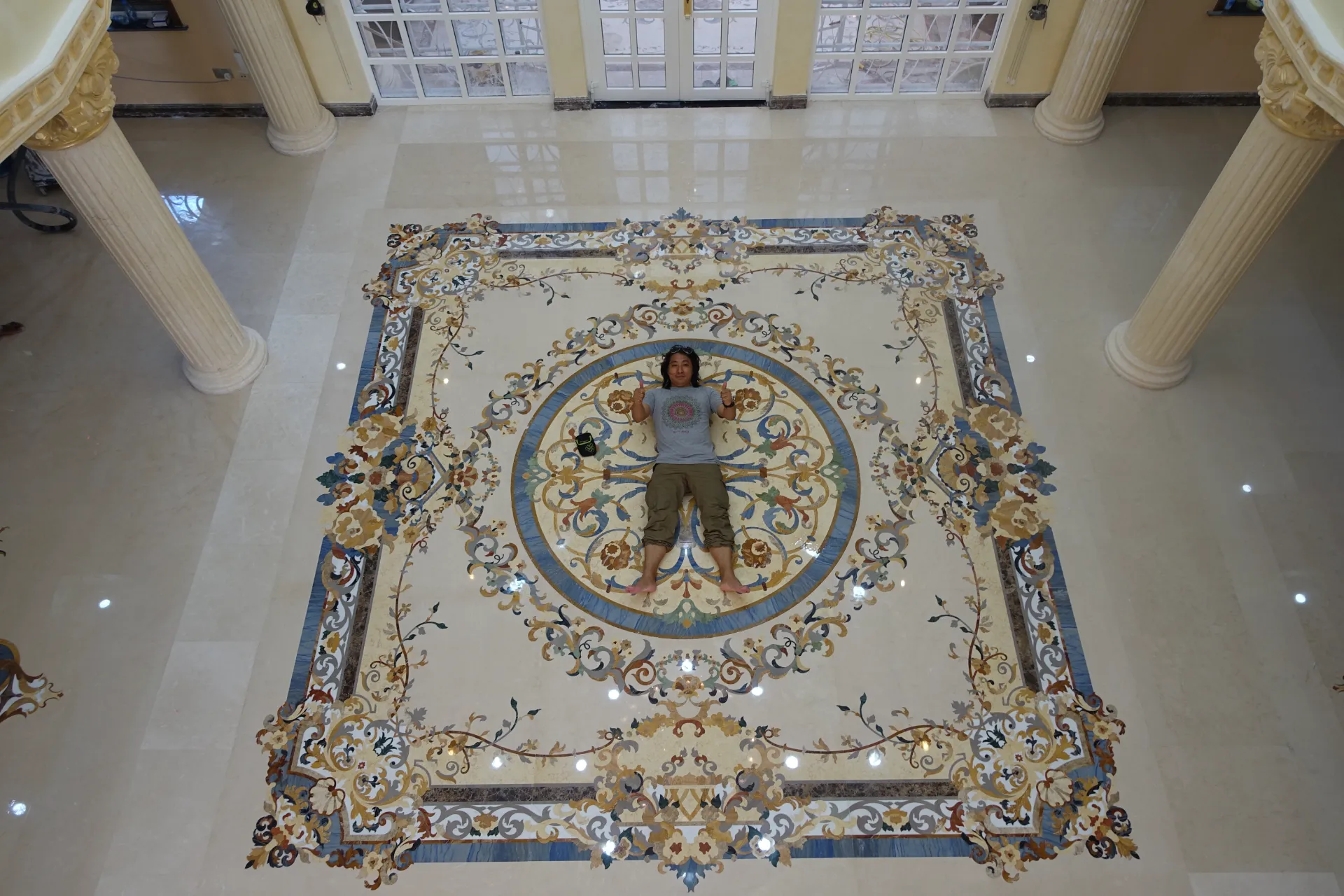
In complex pictorial murals or Pietre DureMurals, disparate stones may have varying absorption rates. Improper sealing can lead to “ghosting”—where one stone type appears darker than another due to moisture retention. Our technical team mitigates this during fabrication by utilizing stone-specific primers before the final assembly. Post-installation, maintaining a consistent ambient humidity is recommended for elite yacht interiors and museum-grade feature walls to ensure the geometric stability of the composition.
Maintenance Protocol Summary:
- Daily: Microfiber dust-mopping and pH-neutral damp mopping
- Monthly: Inspection of transition joints and high-wear areas
- Annual: Professional evaluation of sealant integrity
- Decadal: Light diamond-honing restoration if required
For a detailed PDF copy of our Technical Maintenance Manual or to consult with Bruce on the restoration of a legacy installation, contact our engineering department via WhatsApp or browse our completed projects in the Portfolio.
Related reading
- Bespoke Marble Inlay in London: Townhouses & Estates
- Semi-Precious Stone Inlay: Luxury Feature Walls & Yacht Interiors
- The Architect’s Guide to Custom Marble Inlay Cost & Pricing
- Integrating Custom Marble Medallions into Five-Star Hotel Lobbies
Explore the work: bespoke marble inlay flooring, custom marble medallions, or begin a commission.
Commissions
Restore your marble inlay’s timeless beauty
Send a drawing or a photograph — we return a technical material study, a cut plan and an itemised quote within three working days.