
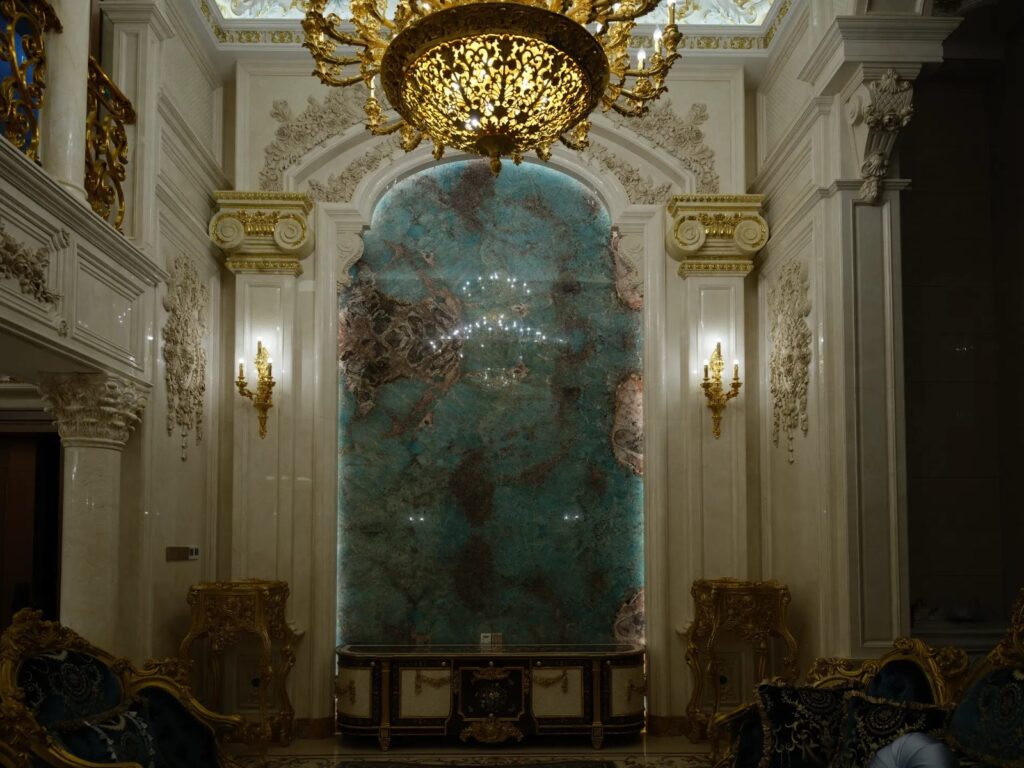
Marble Marquetry represents the intersection of high-end cabinetry traditions and advanced lithic engineering. While the term “marquetry” is historically associated with wood veneers in 17th-century French furniture, the translation of this intricate jigsaw technique into natural stone—known as tarsia marmorea—requires a level of precision that only modern multi-axis waterjet technology can achieve.
The Evolution: From Wood Veneers to Stone Monoliths
As the Senior Technical Director at Art Inlay, I have spent over two decades bridging the gap between classical hand-fitting and industrial waterjet precision. Traditional marble marquetry relied on manual “bow sawing” (the parquetry method), which, while beautiful, lacked the structural consistency required for large-scale architectural surfaces. Today, we utilize multi-axis waterjet systems calibrated to ±0.1mm. This allows us to translate the most complex floral, geometric, and scrolling patterns into 2cm or 3cm marble slabs with zero visible joints.
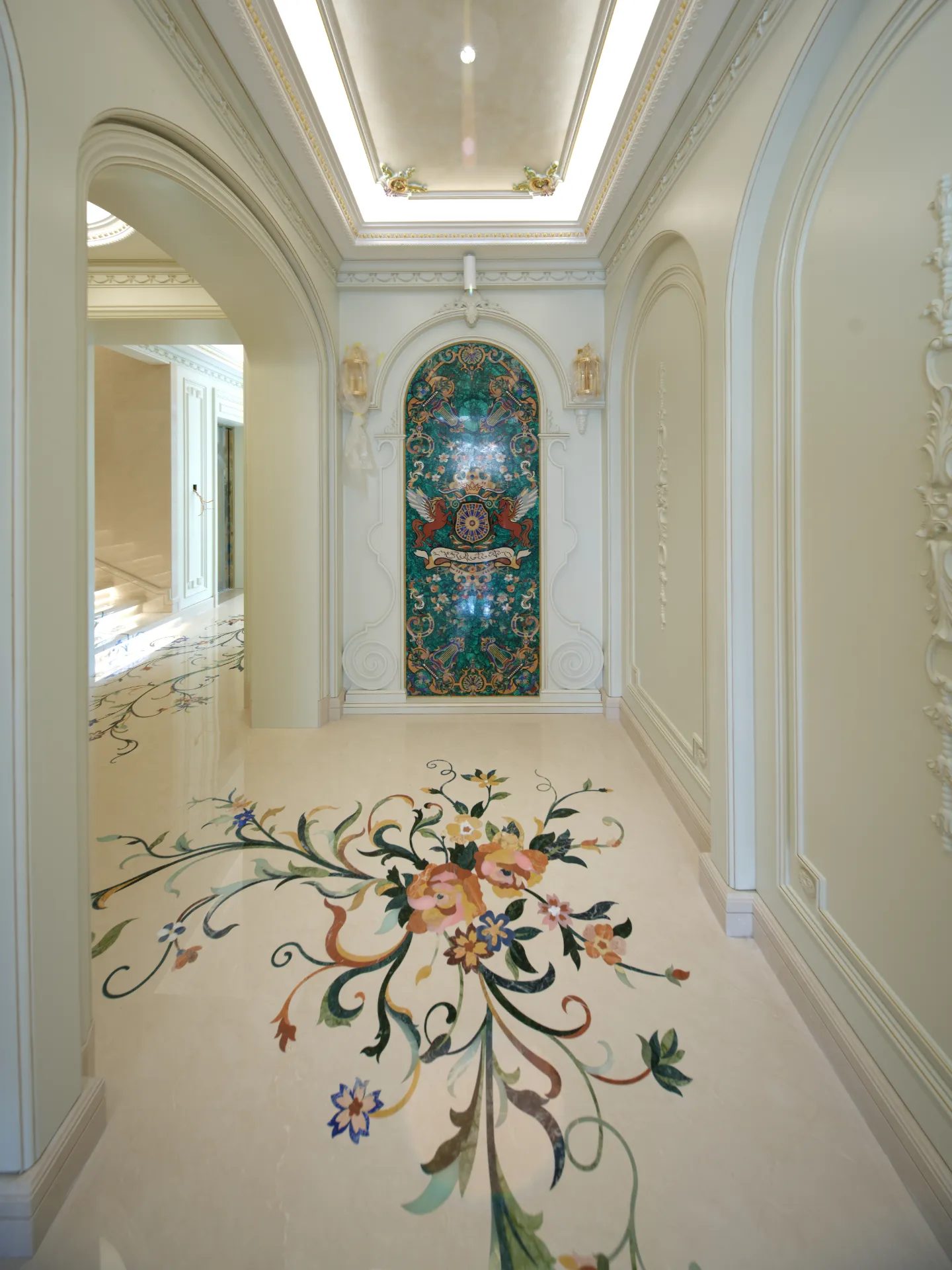
Precision Engineering: The ±0.1mm Tolerance Standard
In luxury stone marquetry, the fit is everything. When interlocking disparate stone types—such as the creamy translucence of Calacatta Oro with the deep, crystalline structure of Nero Marquina—the mechanical bond must be perfect. Our waterjet toolpaths are engineered to account for the “kerf” (the width of the water stream) to ensure that the positive and negative segments lock together without the need for thick grout lines. This “zero-grout” standard is what creates the monolithic appearance that distinguishes Art Inlay from standard tile-based flooring.
Material Selection & Mineral Continuity
Success in marble marquetry is determined by the slab selection. We do not just select stones by color; we select them by mineral density and vein direction. To achieve true marquetry “flow,” we often cut multiple segments from a single block to ensure that the natural veining of the marble continues across the inlaid pattern. This creates a visual “tapestry” effect that is unique to natural stone and cannot be replicated by synthetic alternatives. For high-traffic luxury flooring, we prioritize stones with similar Mohs hardness to ensure uniform wear and polishing results over time.
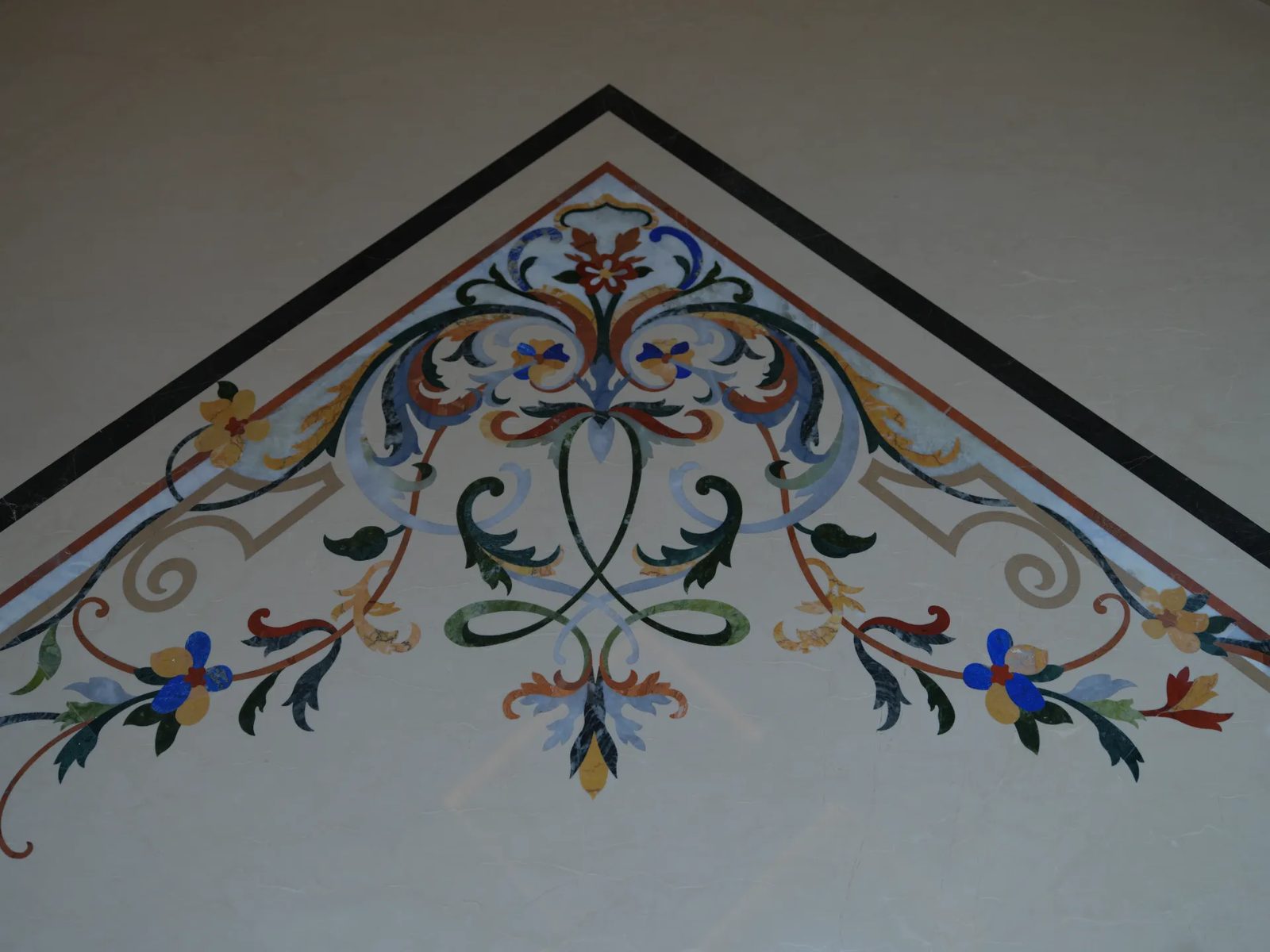
Structural Substrates for Large-Scale Marquetry Panels
One of the primary technical challenges in stone marquetry is weight and fracture resistance. For grand hall flooring or decorative wall panels, we utilize reinforced substrates. Our preferred method involves bonding the hand-fitted stone segments to an aluminum honeycomb or high-tensile fiberglass mesh. This backing provides the structural rigidity needed to prevent fracture during transit while keeping the overall panel lightweight enough for standard architectural installation. This engineering foresight allows architects to specify grand-scale marquetry for luxury yacht interiors and penthouse feature walls where weight is a critical factor.
The Artisan Hand: Dry-Fitting and Final Assembly
While the waterjet provides the precision, the final 5% of the quality is achieved by human touch. At our Jiangmen factory, every marquetry project undergoes a rigorous dry-fit process. Our master artisans hand-file and micro-adjust every segment to ensure the mechanical lock is perfect. Once the dry-fit is verified against the architectural DWG, the segments are vacuum-bonded using high-performance, color-matched epoxy resins. The surface is then ground flat and polished to a monolithic finish, ensuring that the transitions between different marble types are physically imperceptible.
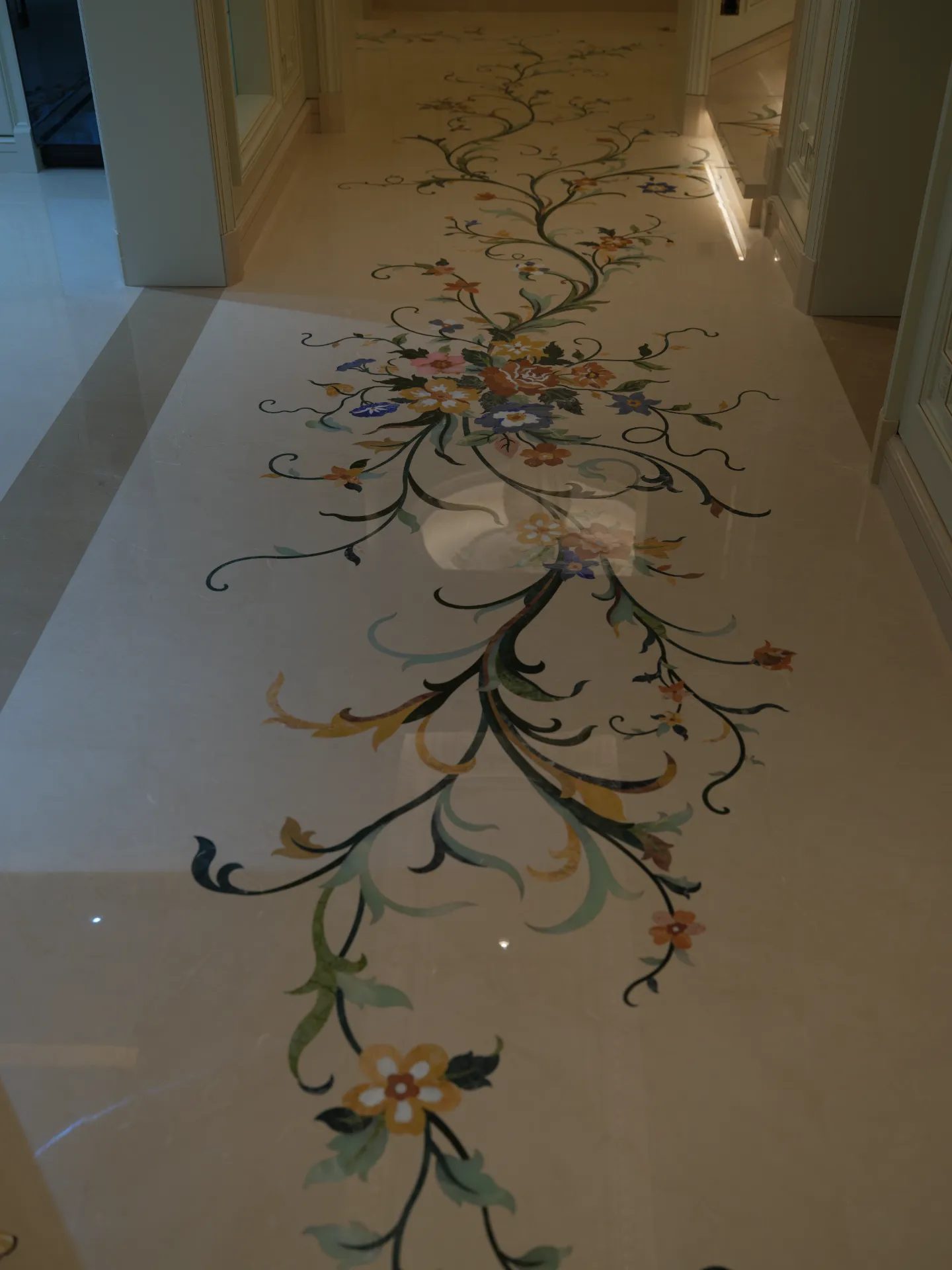
Logistical Mapping: Delivering Factory-Direct Quality Globally
For international projects in New York, London, or Dubai, logistics are as critical as the art. We utilize a “Stone-Mapping” system where every panel of the marquetry installation is numbered and indexed against a master floor plan. We provide detailed installation protocols with every ISPM-15 certified wooden crate, ensuring that the on-site team can achieve the factory standard without the need for field-cutting. This logistical precision reduces installation time by up to 30% and ensures that the design intent is realized without error.
B2B Integration: From Digital Blueprint to Stone Monolith
We work directly with architects and interior designers, translating hand sketches or complex CAD files into precision toolpaths. This bridge between digital design and artisan manufacturing is why Art Inlay is the preferred partner for five-star hotel lobbies and luxury palaces. Whether you are designing a contemporary geometric inlay or a classical French marquetry border, we provide the technical depth required to bring your vision to life in natural stone.
Pre-Sealing & Maintenance for Enduring Art
Every Art Inlay commission is treated with high-performance, breathable stone sealants before it leaves our factory. This protects the marble from moisture and staining during the unboxing and installation phase. We provide architects with a detailed technical maintenance guide, specifying pH-neutral cleaners and re-sealing intervals to ensure that the clarity and depth of the marble marquetry remain unchanged for decades.
Technical Specifications:
- Precision: ±0.1mm Waterjet Tolerance
- Materials: Grade A Statuario, Calacatta, Nero Marquina, Malachite
- Backing: Aluminum Honeycomb / Reinforced Fiberglass
- Finish: Polished / Honed (Monolithic Zero-Grout)
For technical consultations regarding bespoke marble marquetry projects, contact our engineering team via WhatsApp or explore our latest international installations in our Portfolio.