Marble Inlay vs Marble Tile: Which Floor Should You Specify?
Marble tile and marble inlay are often quoted against each other, but they behave differently. Here is the honest comparison — joints, pattern, cost, speed and performance.
Get a free quote →Specifier guide
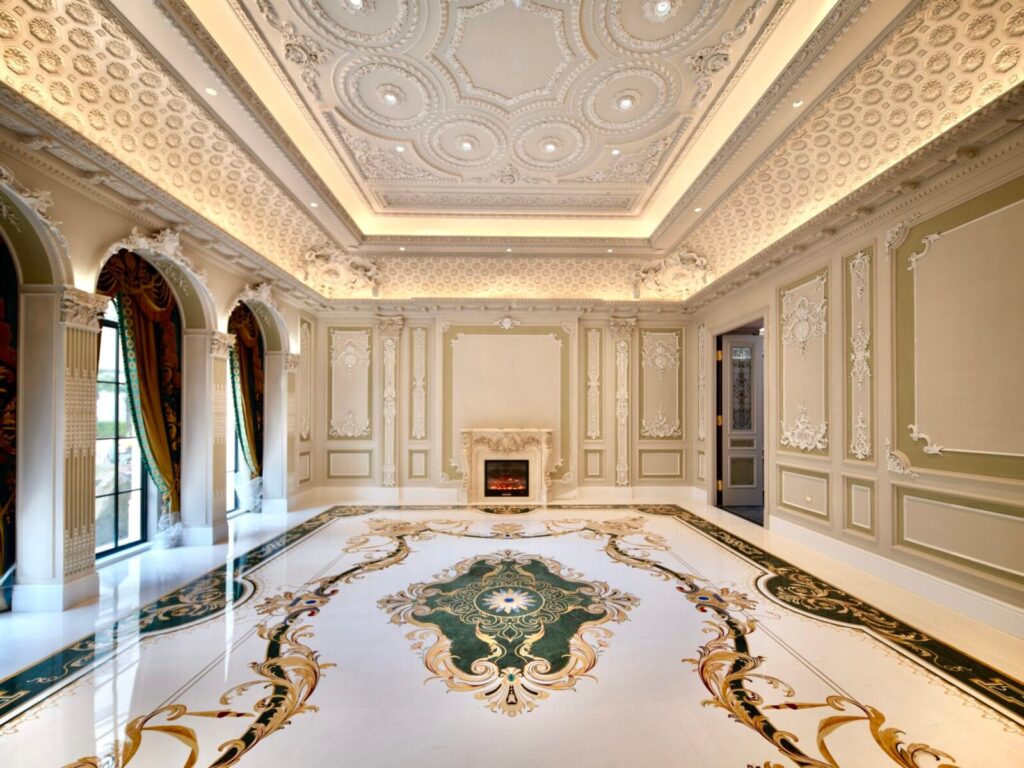
Tile and inlay both use natural stone, so the choice is not about material but about how the floor is made. Tile is supplied as repeatable, grouted modules; inlay is a single engineered composition cut to the room with no grout lines. That difference drives everything else.
Tile is faster and cheaper per m² and works well for simple fields, service areas and large repetitive runs. Inlay carries more cost because it is drawn to size and dry-assembled, but for a statement floor — an entrance, a lobby, a room that should read as one drawing — it delivers a level of finish tile cannot.
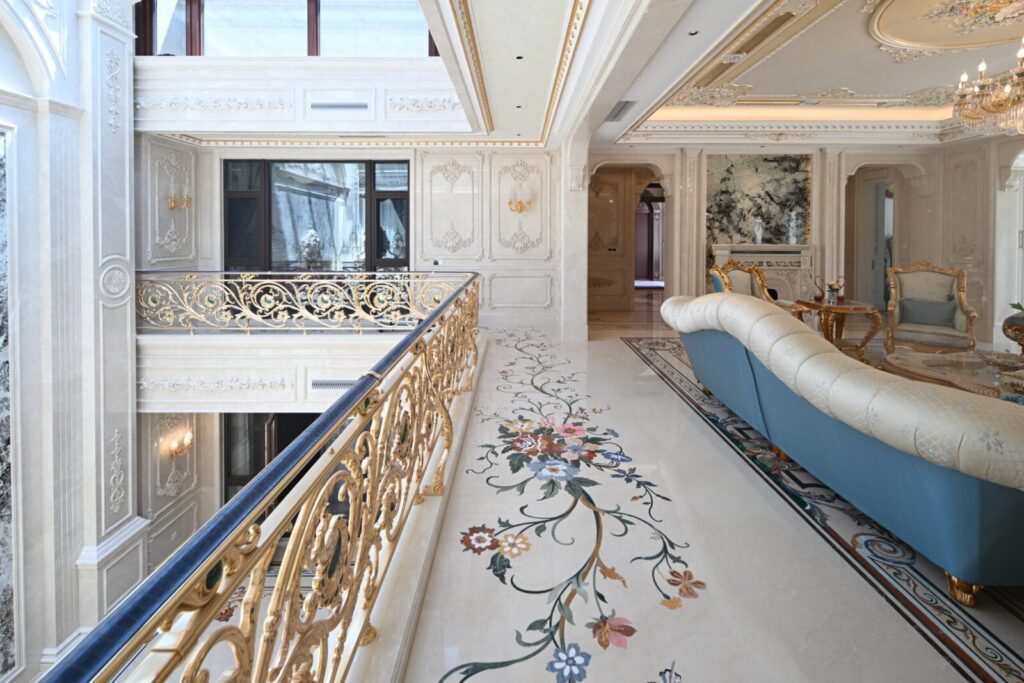
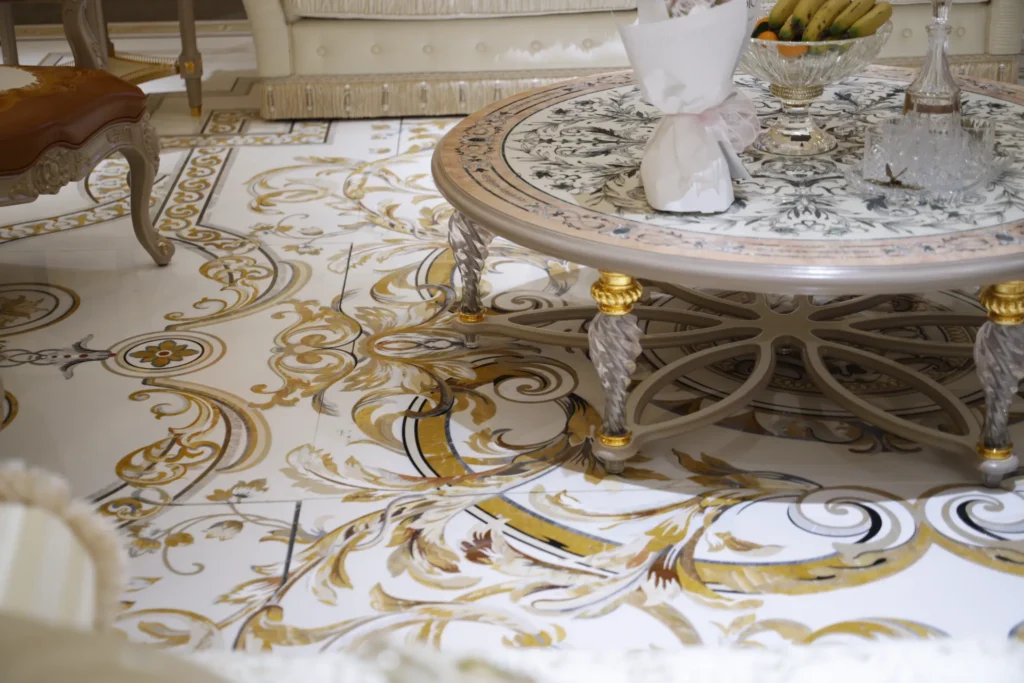
Joints are the visible difference. A tiled floor reads as a grid of grout lines; an inlaid floor is cut to ±0.1mm, lapped and sealed so the pattern runs continuously and the seams close to a hairline. Where a medallion meets a field, inlay lets the geometry line up exactly.
Both are stone, but inlay is planned as a system: substrate tolerance, movement joints, finishes and underfloor heating are engineered into the cut file. Many projects use both — tiled service areas and an inlaid arrival floor — so the budget goes where it is seen.
So the decision is a design one, not a technical one. If the floor should be one continuous drawing in stone, and the budget allows a bespoke commission, inlay is the answer. If it is a simple repeat over a large area, tile is the pragmatic choice.
Numbers that matter
Tile: grout lines. Inlay: cut to ±0.1mm, lapped and sealed with no grout
Tile: repeatable modules. Inlay: a single composition continuous across the floor
Tile is lower per m²; inlay carries a bespoke design and assembly cost
Tile is faster to lay; inlay is made off-site and installed from a numbered plan
Both are stone; inlay plans substrate, joints and heating into the cut file
Tile: large simple fields. Inlay: entrances, lobbies, statement rooms
From drawing to crating
Full-size drawing
The pattern is drawn 1:1 on the atelier floor before any stone is cut, so proportions are settled at the scale you will walk on.
Stone selection
Blocks and slabs are chosen against the drawing, vein by vein, and photographed for your approval.
Waterjet cutting
Multi-axis waterjet cuts every piece direct from the approved CAD file, held to ±0.1mm across the whole figure.
Dry assembly & crating
The composition is assembled, inspected and numbered on the factory floor, then crated with a setting plan.
Answered for specifiers
For visible, statement floors yes — the seamless finish and precise pattern are what tile cannot reproduce.
Yes, and many projects do: tiled service areas and an inlaid arrival floor, so the budget is spent where it is seen.
It arrives numbered with a setting plan; any competent stone installer can lay it, with remote supervision on request.