
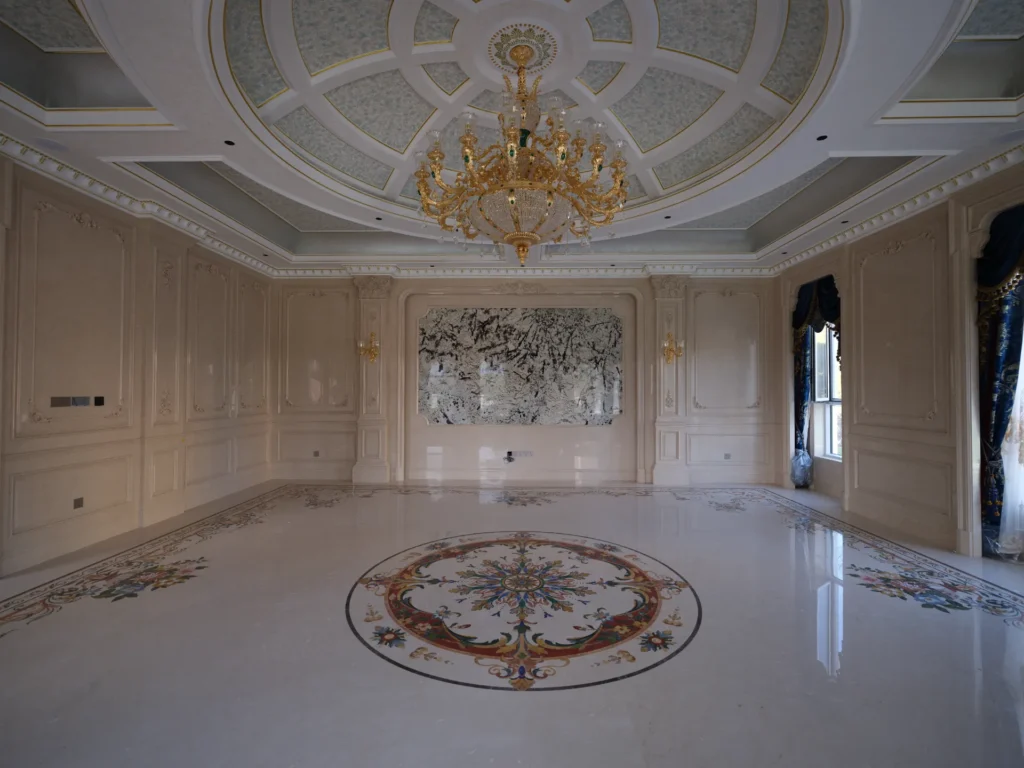
A marble medallion is the centrepiece of a floor, and its size is the one decision that makes or breaks the room. Too small and it looks lost in a grand hall; too large and it crowds the walls and the furniture. This guide gives practical size ranges room by room, how to set the medallion out within the floor, and the details that make it look deliberate rather than added on.
Start here. This guide sits with our medallion resources: see the marble medallions collection, the complete waterjet medallion guide and how to choose a custom medallion.
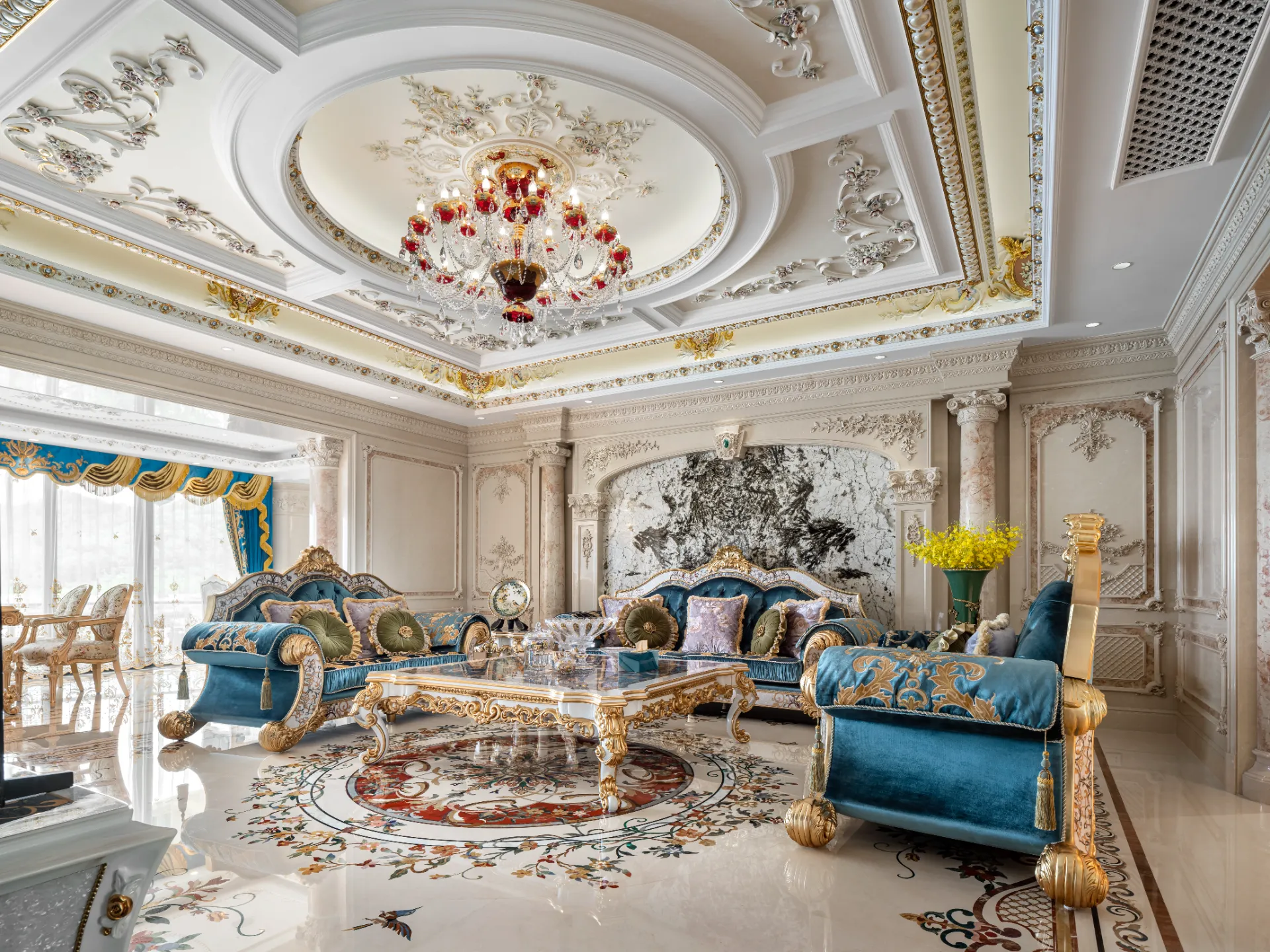
How to choose a medallion size
A medallion is read as a circle or a squared figure within the floor field. Its size should relate to the room and to the furniture standing on it, not to a fixed tile module. Two measurements do most of the work:
- The clear floor area, the open space in front of the entrance or at the centre of the room, with nothing pushing in from the walls.
- The ceiling height, taller rooms carry a larger figure; a low room wants restraint.
As a working rule, a medallion should sit comfortably inside the clear floor with a border of plain field around it, usually at least half the medallion’s own radius of visible field on every side.
Room-by-room size guide
Entrance foyers and halls
The foyer is where the medallion earns its keep. For a typical villa entrance, a figure of 1.2–2.4 m works; for a grand hall or a hotel lobby, 2.4–4 m or more. The medallion should greet the visitor at the threshold, centred on the door, not on the room’s geometric centre if the two differ.
Living and dining rooms
Here the medallion usually sits under a table or a seating group, so size follows the furniture footprint: a figure roughly the width of the dining table, or the width of the main seating arrangement, reads best. Common sizes run 1.2–2.4 m.
Bathrooms and spa rooms
Small rooms want a single, confident figure, often 0.8–1.5 m, set in the centre of the dry area, with the field running to the walls. Avoid a medallion so large that the border disappears; the border is what makes it a medallion.
Hotels, lobbies and grand halls
At this scale the medallion becomes architecture. Figures from 3–6 m and beyond are common, often split into numbered panels for transport and set out to the setting-out lines of the space.
Corridors
In a long corridor, a repeated oval or a running chain of small medallions often reads better than one large circle. If a single medallion is used, keep it to about the corridor’s width so the border stays even.
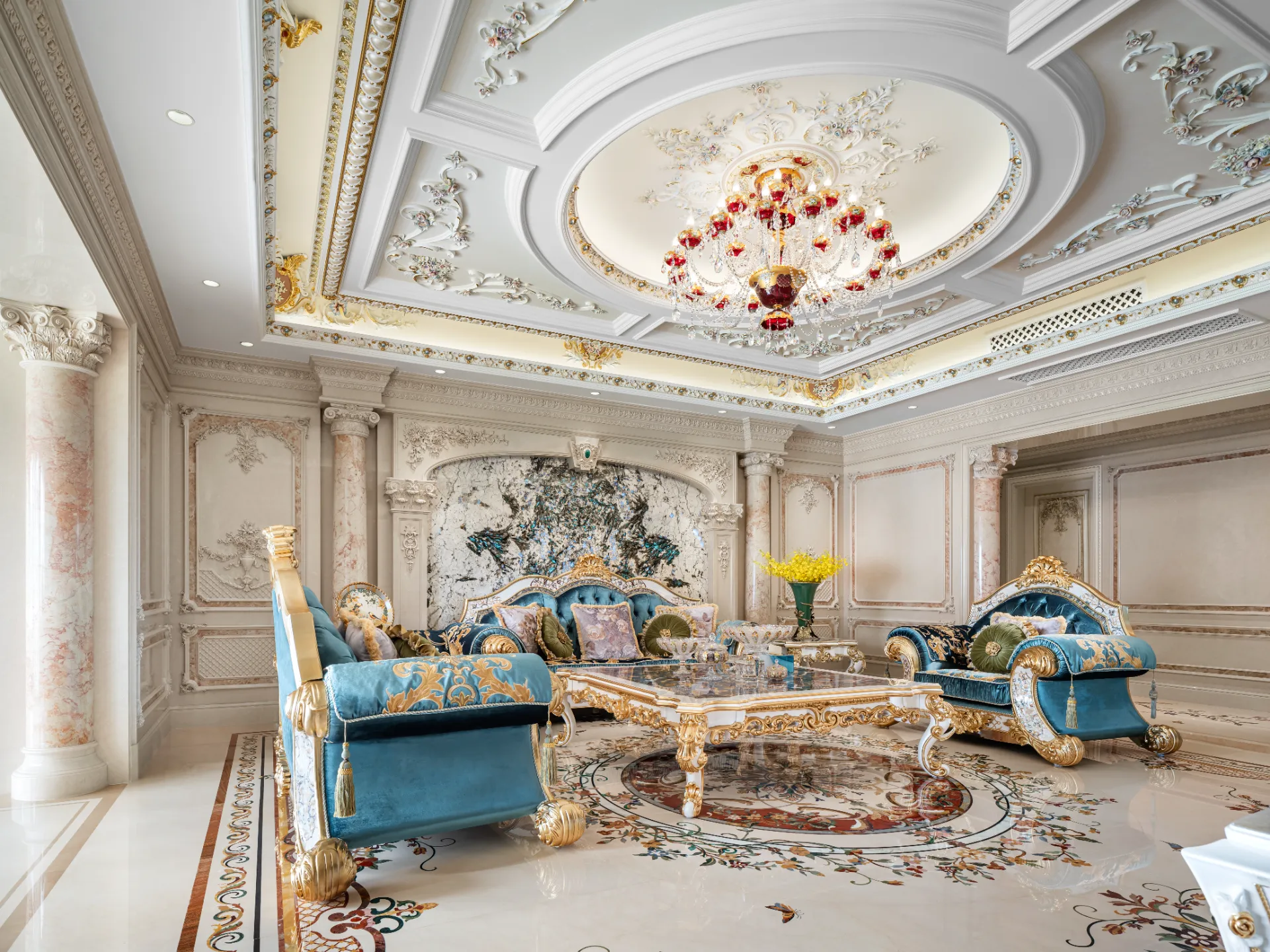
Placement and setting-out
Placement matters as much as size. A medallion is normally centred on the primary axis of the room, usually the door you enter through, so the figure meets you head-on. Where a room has two entrances, the medallion is set at the intersection of their sightlines. The set-out drawing fixes these lines before anything is cut; on site, the border is laid first and the field is set into it, so the figure lands exactly where the drawing places it.
Proportion rules of thumb
- The field surrounds the figure. Leave plain field at least half the medallion radius wide on all sides.
- Match the medallion to the border. A deep border wants a larger, calmer medallion; a fine hairline border pairs with a denser figure.
- Relate to the door. A figure narrower than the entrance can look mean; match or exceed the doorway width where possible.
- Only one focal point. If the room already has a strong feature, a staircase, a fireplace, the medallion should defer to it.
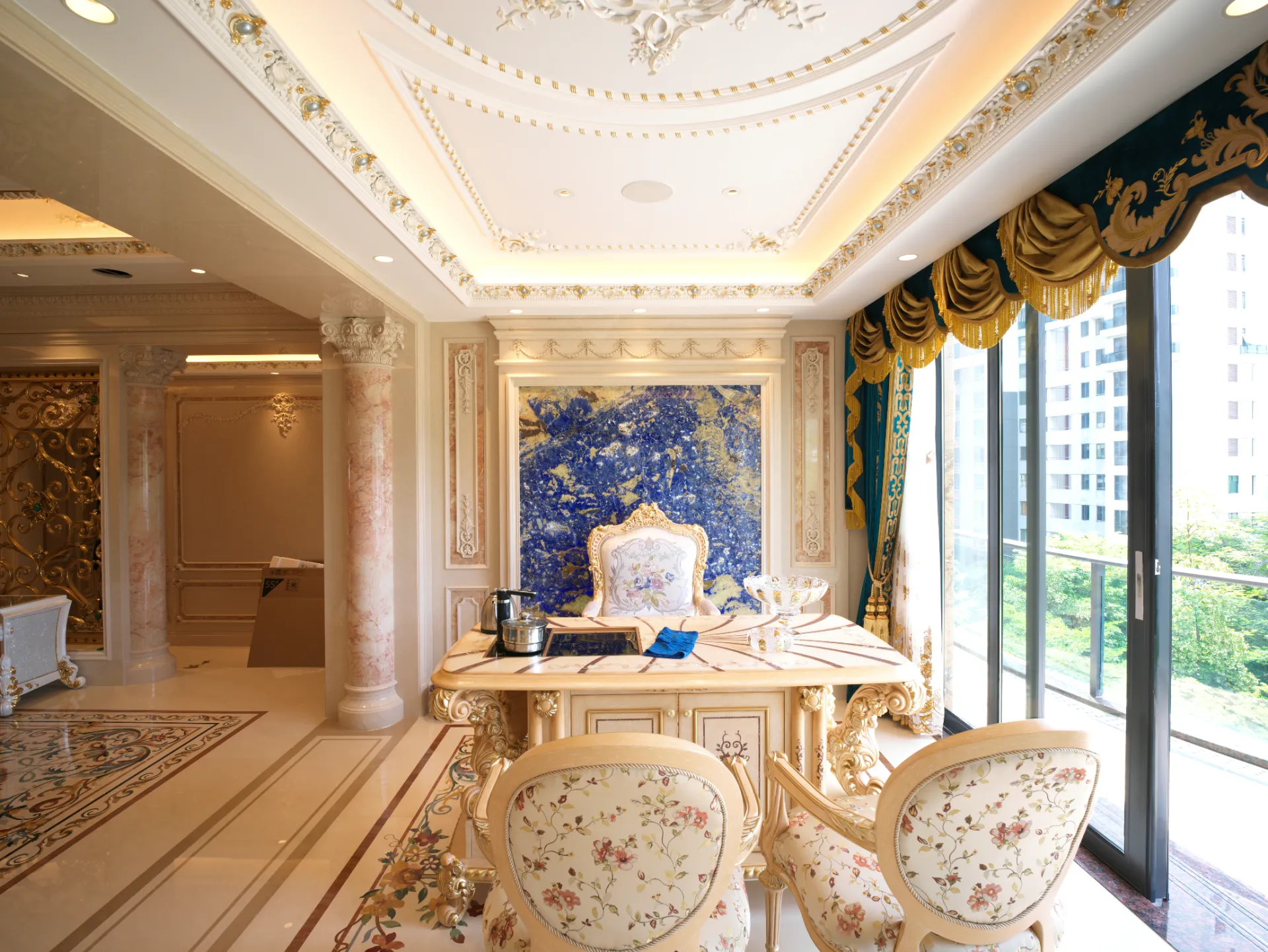
Borders with the medallion
Most medallions are completed by a border, which frames the field and ties the figure to the walls. The border should echo the medallion’s geometry, a circular figure sits well inside a Greek key band, an octagonal figure inside a guilloche. If you are undecided, a single fine line plus the medallion is often the calmest solution in a modern room. See our guide to marble inlay borders.
Frequently asked questions
Can a medallion be too big?
Yes. If it leaves no plain field around it, the floor looks busy and the figure loses its authority. Keep a visible border of field.
Should the medallion be centred on the room or the door?
On the entrance sightline first; adjust to the room only if the two are close.
How thick is a medallion?
Usually 18 mm, matched to the surrounding floor so it beds flush; the field is set to the same level.
Can you match the medallion to existing stone?
Often, send a photograph with a reference measurement and we will match stone and figure as closely as possible.
Commissions
Start a medallion project
Send a drawing or a photograph, we return a technical material study, a cut plan and an itemised quote within three working days.