
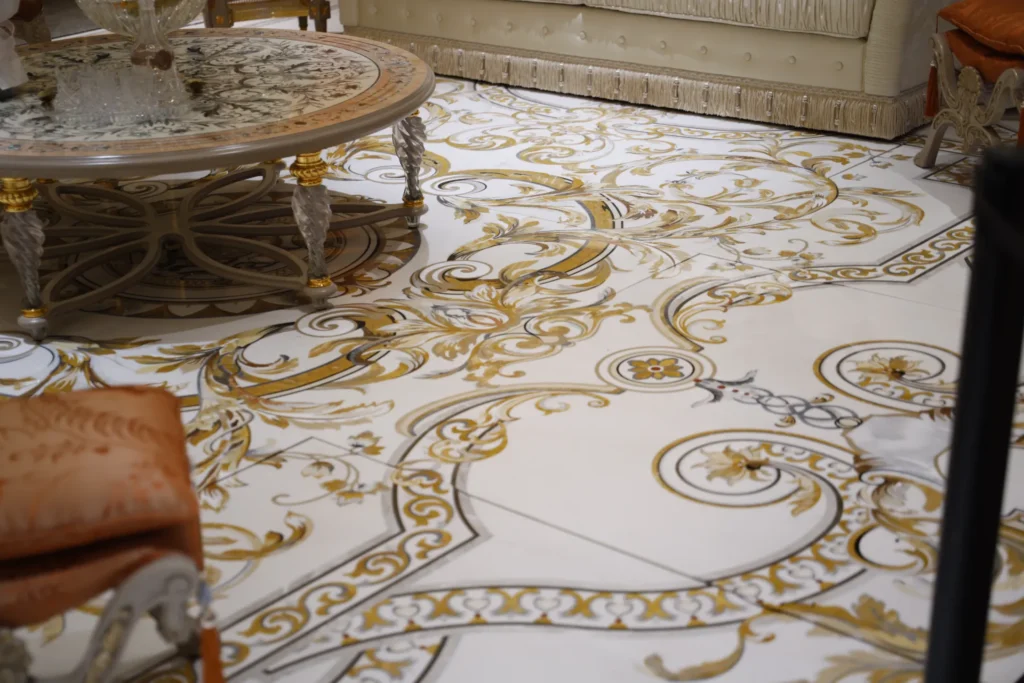
White marble inlay is the most requested palette in bespoke stone floors, and the one that rewards restraint most. Calacatta, Statuario and Thassos give the drawn line its clarity; the skill lies in choosing which veined and coloured stones to place against them. This guide explains the main white stones, how they behave in inlay, and how to design a white inlay floor that stays crisp rather than busy.
Start here. Part of our material library: see inlaid marble flooring, the five stone types for high-traffic floors and colour and contrast.
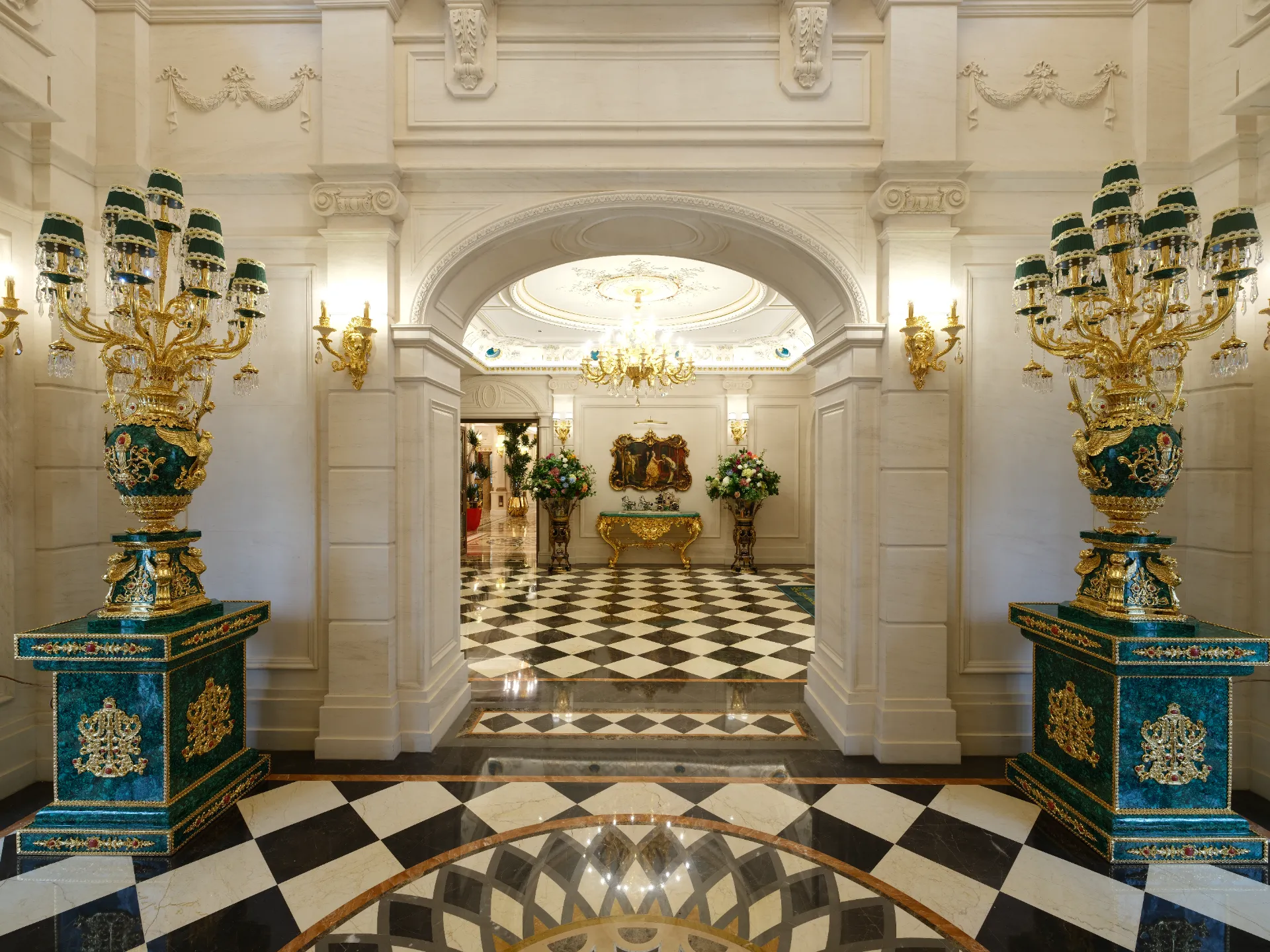
The white stones, and how they differ
- Calacatta, a warm white with bold gold and grey veining. The classic choice for grand floors; its drama is in the vein, so it is often used in larger fields.
- Statuario, a cooler, brighter white with grey veining. More uniform than Calacatta, it reads as a crisp ground for fine lines.
- Thassos, a dense, near-pure white with almost no veining. The quietest ground; it makes any contrast stone look deliberate.
- Bianco Carrara, a softer, slightly grey-white with fine veining. Less “white” than the others, but the most forgiving.
Why white stone suits inlay
Inlay depends on legibility. A white ground gives dark lines and coloured insets maximum contrast, so a Greek key, a guilloche or a geometric grid reads instantly. White stone is also the traditional ground for pietre dure, where the coloured hardstones were chosen to sing against a pale field. The risk is the opposite of legibility: too many competing colours on a white ground looks scattered. Let the white be the silence around the note.
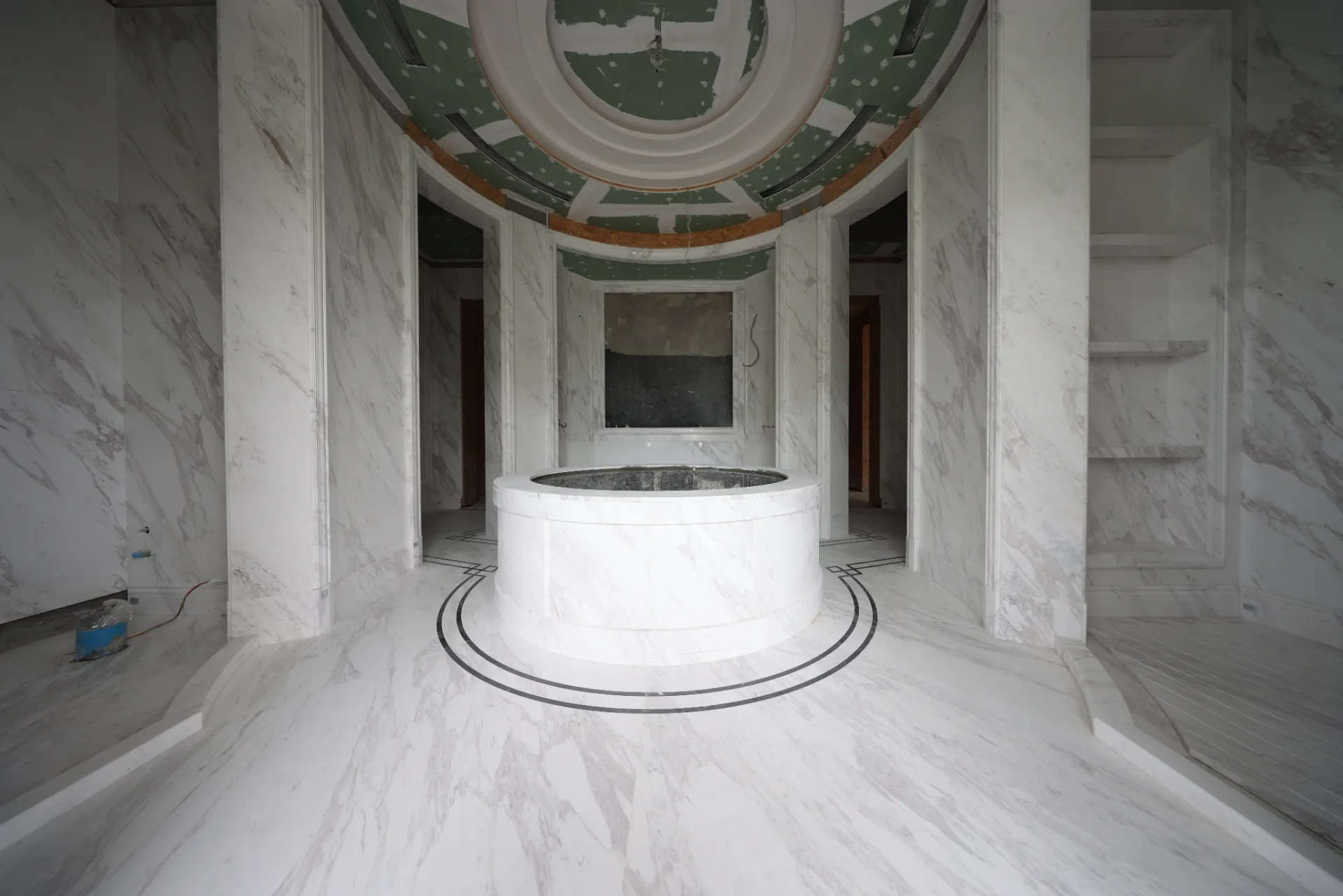
Designing with a white ground
- Choose the contrast first. Nero Marquina (black), Verde Alpi (green) or a brass fillet against white are the safest pairs.
- Keep the palette small. One white field, one contrast line, one accent is usually enough; two accents at most.
- Match the finish. A single polished surface makes the joints vanish; a honed floor is more forgiving underfoot and in bathrooms.
- Plan the vein. In a large field, the direction of Calacatta’s vein is part of the design — decide it before cutting, not on site.
White marble inlay in high-traffic rooms
White marbles are softer than black or green stones, so in busy areas the choice of white matters. Statuario and Thassos are dense and wear well; ordinary Carrara is softer and will mark. For entrances, lobbies and bathrooms, pair a hard white field with a hard contrast stone, specify a honed or honed-and-sealed finish, and follow a simple cleaning routine — see our maintenance guide.
Frequently asked questions
Does white marble inlay show dirt?
Less than a dark polished floor; a honed, sealed white surface is practical. Very light floors do show grout darkening over years, which is why we close joints with colour-matched stone epoxy.
Calacatta or Statuario?
Calacatta for a bolder, warmer room; Statuario for a crisper, cooler, more uniform ground.
Can white inlay be used in bathrooms?
Yes — with drainage falls and slip-resistance designed into the cut file, as in our bathroom & spa inlay.
Will the white stay white?
Natural stone does not yellow like tile grout; a neutral cleaner and periodic sealing keep it that way.
Commissions
Start a white marble inlay project
Send a drawing or a photograph — we return a technical material study, a cut plan and an itemised quote within three working days.