
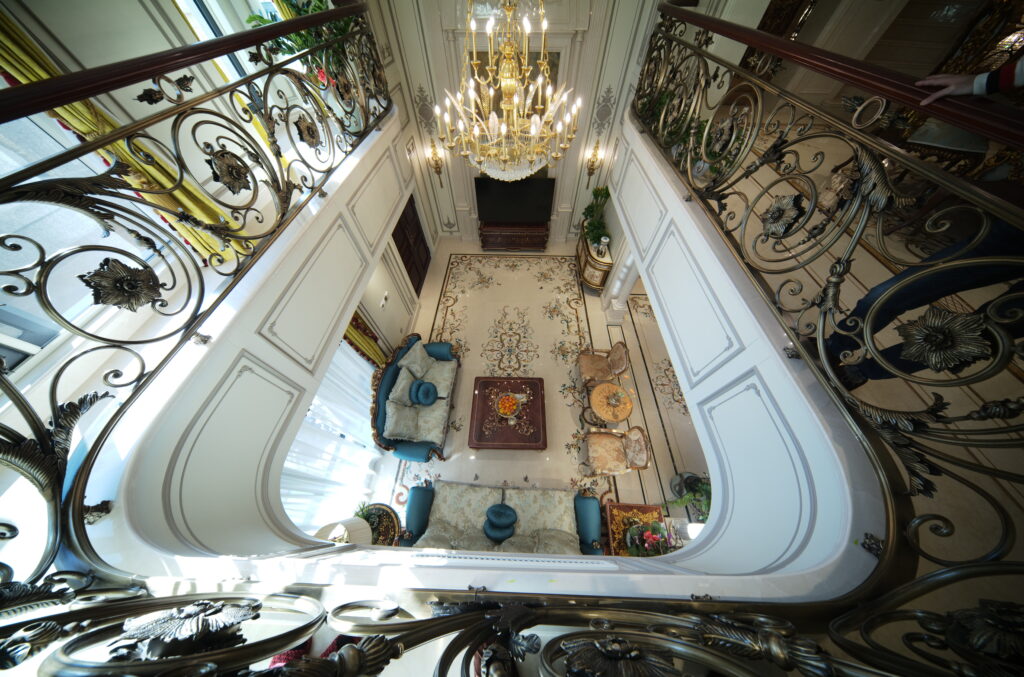
Marble inlays represent the pinnacle of architectural stonework—a centuries-old discipline where precisely shaped stone components fit together so tightly that grout lines virtually disappear. Yet, when designing a grand entrance rotunda, private estate gallery, or luxury penthouse foyer, architects and interior designers routinely weigh marble inlays against two other celebrated decorative stone techniques: architectural mosaics and poured or precast terrazzo. Each material possesses distinct aesthetic qualities, mechanical tolerances, and installation protocols.
Start here. This guide forms part of our technical stone library. For custom project inquiries, explore our custom marble inlay flooring, waterjet marble medallions, and bespoke pietre dure commissions. To review structural substrate and site coordination criteria, consult our architect’s specification guide and technical marble inlay installation manual.
The Fundamental Architectural Differences
Choosing between marble inlays, mosaics, and terrazzo requires evaluating how the human eye registers the surface, how structural loads and substrate movement interact with joints, and how the material is fabricated and installed.
Marble inlays (derived from Italian intarsio and Florentine commesso) are composed of custom-cut slabs of natural marble, limestone, granite, and semi-precious stone. Modern fabrication utilizes high-pressure CNC abrasive waterjet cutting operating at up to 6,000 bar. Individual stone shapes are cut directly from computer-aided design (CAD) files to tolerances within ±0.1mm. Because the stone edges fit with hairline precision, joints are bonded using colour-matched stone epoxy and diamond-polished flush on site, yielding a continuous, zero-grout visual plane.
Stone mosaics consist of small, modular geometric or hand-cut chips called tesserae (typically ranging from 10×10mm to 25×25mm), arranged on a backing mesh or laid directly into an adhesive bed. The aesthetic identity of a mosaic floor is defined by its repetitive grid of visible cementitious or epoxy grout lines, creating a textured, tactile surface that fractures light differently than solid stone.
Terrazzo is a composite material formed by embedding marble, granite, quartz, or glass chips into a cementitious or epoxy resin matrix. Once cured, the entire surface is ground and polished flat. Unlike the intentional, curated pictographic patterns of marble inlays, classic terrazzo produces a speckled, monolithic aggregate distribution interrupted only by functional brass or zinc divider strips that mitigate substrate cracking.
Comparative Specifier Matrix: Marble Inlays vs Mosaics vs Terrazzo
The following technical matrix outlines key engineering parameters across all three flooring disciplines:
| Specification Parameter | Bespoke Marble Inlays | Architectural Stone Mosaics | Poured or Precast Terrazzo |
|---|---|---|---|
| Primary Joint Width | Hairline (≤ 0.2mm), filled with matching stone resin | 2.0mm to 4.0mm cementitious or epoxy grout lines | Seamless monolithic fields segmented by 3–6mm metal dividing strips |
| Pattern Resolution & Detail | Exceptional; continuous curves, fine botanical scrolls, heraldry, micro-inlaid borders | Pixelated; photographic or figurative forms approximated by tesserae grid | Abstract, homogeneous speckle; geometric zones controlled by bending metal divider strips |
| Fabrication Methodology | 5-axis abrasive CNC waterjet cutting with master stonemason hand-dressing | Waterjet or guillotine chopped tesserae pre-mounted on fiberglass mesh sheets | In-situ slurry pour over screed, or factory precast slabs with post-grinding |
| Factory Dry Assembly | 100% dry-dock assembled, numbered, and crated before shipment | Modular mesh sheets (300×300mm) batch checked | Samples poured; final formulation poured directly on the building site |
| Thickness (Stone Layer) | 15mm to 20mm solid stone (or 8mm stone backed with honeycomb aluminium) | 8mm to 10mm tesserae thickness | 6mm to 10mm (epoxy resin) or 15mm to 30mm (cementitious terrazzo) |
| Slip Resistance (Pendulum PTV) | PTV 36+ when honed; high-gloss polish suited for grand foyers and halls | Inherently high wet slip resistance due to dense grout grid traction | Variable based on final grit polish; sealant choice dictates slip rating |
| Substrate Deflection Limit | Strict L/720 deflection criterion to protect rigid stone bonds | L/360 to L/480; small tesserae accommodate minor substrate undulation | L/480 with engineered crack-isolation joints at all slab construction seams |
| Life Expectancy & Refinishing | Generational (100+ years); can be deep-ground and repolished repeatedly | 50+ years; grout joints degrade and require periodic re-pointing and scrubbing | 75+ years; durable surface can be mechanically diamond-reground and sealed |

When to Specify Marble Inlays
Marble inlays are unmatched when the floor must serve as the primary artistic statement of an interior space. Because an inlaid composition is planned stone-by-stone, it establishes a formal dialogue with the ceiling coffers, door portals, and architectural axes of a building.
1. Grand Entrances, Rotundas, and Reception Foyers
An entrance hall creates the definitive first impression of a luxury residence or landmark hotel. Specifying a custom marble floor medallion or central heraldic crest anchors the room’s symmetry. The zero-grout finish reflects chandeliers with pristine clarity without the distracting dark lines of a tile grid.
2. Formal Dining Salons and Ballrooms
In high-end residential estates and hospitality projects, marble inlays allow designers to frame dining tables or seating zones with intricate marble borders and guilloche bands. Unlike area rugs that wear, stain, or pose trip hazards, an inlaid stone rug remains permanent, impervious to foot traffic, and easy to maintain.
3. Heritage Restoration & Classical Architecture
Projects inspired by Renaissance, Palladian, Neoclassical, or Beaux-Arts architecture demand the authentic visual weight of continuous natural stone. Waterjet marble cutting captures the delicacy of acanthus leaves, classical Greek keys, and delicate arabesques with factory consistency that cannot be replicated through mosaic tesserae.
When Architectural Mosaics Make Sense
While marble inlays deliver superior optical continuity and graphic resolution, architectural stone mosaics excel in specific environments where surface topography and moisture dynamics govern design choices.
1. Wet Areas, Spa Rooms, and Hammams
In steam rooms, walk-in shower bases, and pool surrounds, safety is the primary engineering constraint. The dense frequency of grout lines in a mosaic floor provides mechanical slip resistance under bare feet, achieving high pendulum test values (PTV) even when wet. In contrast, while marble inlays can be specified with honed or micro-textured finishes in bathrooms (as detailed in our luxury bathroom and spa inlay guide), large polished marble pieces in wet shower zones require careful drainage planning.
2. Curved Surfaces and Vaulted Ceilings
Because mosaics consist of small individual pieces mounted on flexible mesh backings, they conform easily to compound curves, barrel-vaulted ceilings, cylindrical columns, and concave niche walls. Fabricating a curved marble inlay panel requires CNC five-axis carving or custom backing moulds, which significantly elevates fabrication expense.
3. Intentionally Antiqued or Rustic Textures
For rustic Mediterranean villas or Roman bathhouse aesthetics, tumbled mosaic tesserae provide an aged, hand-hewn patina. Marble inlays, by contrast, convey crisp refinement, formal geometric precision, and monolithic luxury.
When Terrazzo is the Strategic Choice
Terrazzo occupies a unique position in modern architectural design. Originally developed by Venetian mosaic workers who pressed discarded marble fragments into goat milk and clay binders, contemporary epoxy terrazzo is a powerhouse of durability.
1. High-Footfall Commercial Concourses and Airports
In high-traffic airport terminals, public civic halls, and museum atriums subject to tens of thousands of rolling luggage wheels and pedestrian crossings daily, terrazzo is unmatched. The absence of tile joints prevents edge chipping, and the dense resin matrix resists chemical staining.
2. Vast, Unbroken Monolithic Expanses
When an architect envisions an expansive, continuous field of thousands of square metres with a minimalist, mid-century modern aesthetic, poured terrazzo is significantly faster to install across open spaces than individually placed tiles or large-format stone panels.
Limitations of Terrazzo Compared to Marble Inlays:
- Loss of Natural Stone Veining: Terrazzo relies on crushed chips suspended in binder. It cannot display the dramatic book-matched movement, crystal depth, or organic veining inherent to full-slab marbles like Calacatta Oro, Nero Portoro, or Verde Alpi.
- Required Metal Dividing Strips: Terrazzo requires divider strips (brass, zinc, or plastic) placed at frequent intervals to manage shrinkage and thermal movement. These strips impose rigid grid lines across the floor.
- On-Site Disruption: Poured-in-place terrazzo requires extensive on-site slurry pouring, prolonged multi-day curing, and aggressive heavy wet grinding, generating substantial slurry, moisture, and noise that can disrupt other interior trades during fit-out.
The Hybrid Approach: Inlays Framed by Terrazzo or Mosaics
Sophisticated luxury projects do not necessarily force an either/or compromise. The most compelling bespoke interiors frequently combine two or three disciplines into a unified floor plan:
- Central Inlaid Medallion with Terrazzo Field: Installing a high-precision waterjet marble medallion at the center of an entrance rotunda, enveloped by a subdued, aggregate-matched terrazzo field, concentrates visual drama where it matters most while managing budget across broad perimeters.
- Inlaid Marble Field with Mosaic Borders: An intricate marble inlay floor field bounded by hand-tessellated micro-mosaic perimeter bands bridges classical antiquity with modern precision cutting.
- Brass Transition Inlays: Embedding solid architectural brass fillets into waterjet-cut marble channels (as explored in our hybrid stone and brass guide) adds metallic reflectivity that bridges stonework with lighting fixtures and architectural hardware.
Engineering Tolerances: Why ±0.1mm Factory Precision Matters
The single greatest risk on an architectural stone project is site misalignment. Traditional on-site stone cutting with bridge saws or wet hand tools introduces tolerances of ±1.5mm to ±3.0mm. Over a 5-metre medallion or across a 20-metre corridor, these micro-discrepancies accumulate into visible joint tapers, crooked borders, and unsightly grout voids.
At the Art Inlay atelier in Jiangmen, our engineering methodology eliminates on-site variation:
- 1:1 CAD Nesting: Every marble piece is assigned a unique coordinate in CAD. Nesting software optimizes grain orientation across consecutive stone slabs, ensuring natural vein continuity across joints.
- Abrasive Waterjet Precision: 5-axis waterjets cut the stone submerged under water, maintaining cool stone temperatures to prevent micro-fracturing in delicate crystals and semi-precious stones. Tolerances are held strictly within ±0.1mm.
- Complete Atelier Dry Assembly: Before any shipment leaves our facility, the entire floor, medallion, or wall panel assembly is laid out 100% dry in our inspection docks. Stonemasons hand-dress any microscopic anomalies, photograph the complete dry-lay under uniform lighting for client approval, and apply waterproof coordinate labels to the reverse of every modular panel.
- Crated Modular Delivery: Panels are packed into export-grade, moisture-sealed wooden crates alongside a comprehensive, colour-coded setting plan and shop drawing. On site, the installation team lays the floor like a precision-engineered puzzle, eliminating field cutting, reducing installation hours by over 60%, and ensuring absolute alignment.
Cost Comparison & Investment Drivers
Understanding the budget structure helps specifiers allocate stone allowances efficiently across a luxury project:
| Flooring Type | Relative Investment Level | Primary Cost Drivers | Installation Time on Site |
|---|---|---|---|
| Bespoke Marble Inlays | Premium to Ultra-Luxury | Stone rarity (Statuary, onyx, lapis lazuli), cutting linear metre density, factory dry assembly | Fast (pre-assembled modular numbered panels lay swiftly with minimal on-site cutting) |
| Hand-Laid Stone Mosaics | High to Premium | Tesserae size (micro-mosaics require thousands of hand-placed tiles per m²), intricate shading | Moderate to Slow (requires careful sheet tamping, meticulous joint alignment, and extensive grouting) |
| Epoxy Terrazzo | Moderate to High | Minimum square metre mobilization fees, resin quality, number of metal divider strip curves | Extended (multi-day curing, on-site heavy diamond grinding, chemical densifying and sealing) |
For detailed budgetary benchmarks and factor analysis, refer to our comprehensive guide on what drives custom marble inlay costs.
Frequently Asked Questions
Are marble inlays slippery compared to mosaics?
Polished marble inlays offer a smooth, glass-like finish ideal for dry grand foyers, galleries, and reception halls. When specified for dining areas or bathroom perimeters, they can be honed or brushed to meet European Pendulum (PTV 36+) slip resistance standards. Mosaics offer naturally higher wet traction due to frequent grout lines, making them standard for wet shower pans.
Can marble inlays crack if the building slab settles?
All rigid architectural stone floors require proper substrate engineering. A stable concrete slab cured to standard dryness with a deflection rating of L/720, combined with an anti-fracture uncoupling membrane and flexible stone adhesive, protects marble inlays from reflective substrate movement. Poured terrazzo uses divider strips to isolate cracks, while mosaics accommodate slight substrate flexure due to modular grout joints.
How are joints sealed in custom marble inlays?
Unlike tile or mosaic floors that use porous cementitious grout, bespoke marble inlays use two-part, UV-stable colour-matched polyester or epoxy stone resin. The joints are filled flush, cured, and diamond-polished alongside the marble to create a seamless, non-porous floor surface that never harbors dirt or discolours.
Can custom marble inlays be installed over underfloor heating?
Yes. Natural marble possesses outstanding thermal conductivity. When installing over hydronic or electric radiant heating systems, an uncoupling membrane and perimeter expansion joints must be incorporated in accordance with our technical installation standards.
How do I order custom marble inlays from Art Inlay?
Send us your architectural floor plan, elevation drawing, CAD file, or reference imagery. Our technical drafting department will produce an itemised material schedule, CAD cut plan, and fixed quotation within three working days.
Commissions
Commission Precision Marble Inlays
Send an architectural drawing, sketch, or moodboard. We return a comprehensive material study, CAD cut plan, and an itemised factory quote within three working days.